

Why Is the GZ-122 LED Aviation Obstruction Light Commonly Used on Towers and Wind Turbines?

Why Is the GZ-122 LED Aviation Obstruction Light Commonly Used on Towers and Wind Turbines?
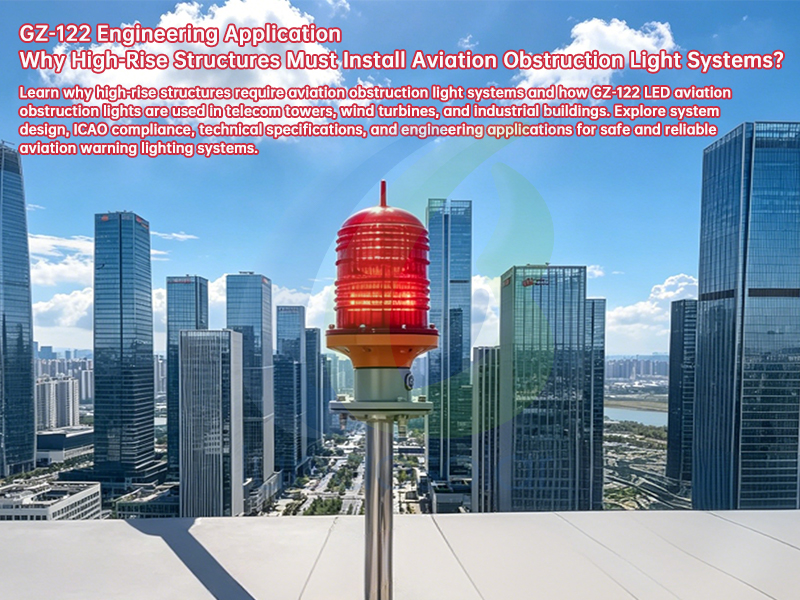
The GZ-122 LED aviation obstruction light is designed for communication towers, wind turbines, and other tall structures that require aviation safety marking. Its primary function is to provide a consistent visual warning signal during nighttime and low-visibility conditions, helping aircraft identify obstacles in advance.
As infrastructure expands into remote and harsh environments, the need for reliable and low-maintenance aviation lighting systems has increased significantly.
Why Do Tall Structures Require Obstruction Lighting?
In normal daylight conditions, tall structures are generally easy to detect. However, visibility can drop significantly under certain conditions:
- Night-time flight operations
- Fog, rain, or low-cloud weather conditions
- Low-altitude flight paths near towers or turbines
While the structure itself does not change, its visibility to pilots becomes limited. The main safety concern is therefore not the structure itself, but reduced visual detectability in specific environments.
Engineering Principle Behind Obstruction Lighting
In aviation safety design, a widely applied principle is:
Any structure that may affect air traffic should maintain continuous visual identification capability.
Based on this principle, obstruction lights are commonly installed on communication towers, wind turbines, and high-rise structures. Installation layout, quantity, and configuration are adjusted based on structure height and airspace requirements rather than a fixed standard.
Key Technical Requirements for Selection
In most engineering applications, obstruction lights are evaluated based on the following performance criteria:
- Visibility distance (≥10 km typical requirement) – ensures early detection by aircraft
- IP67 protection rating – resistance to rain, dust, and coastal salt exposure
- Operating temperature (-40°C to +60°C) – ensures stable performance in extreme climates
These specifications are primarily used to evaluate long-term reliability in outdoor, unattended installations.
GZ-122 Engineering Features
The GZ-122 LED aviation obstruction light is designed to meet these field requirements:
- High-intensity LED light source with low lumen degradation
- Visibility distance of ≥10 km for long-range detection
- IP67-rated housing for harsh environmental conditions
- Wide operating temperature range from -40°C to +60°C
These features make it suitable for long-term operation in locations where maintenance access is limited.
Typical Applications
The GZ-122 is commonly used in the following installations:
- Communication towers and telecom base stations
- Wind turbine systems
- Industrial chimneys and high-rise structures
In most cases, it is integrated as part of a complete aviation obstruction lighting system rather than used as a standalone device.
Conclusion: Why It Is Frequently Selected
The selection of an aviation obstruction light is not based on a single specification, but on overall system suitability.
The GZ-122 is commonly used in tower and wind energy projects because it aligns well with key operational requirements:
- Reliable long-term operation in unattended environments
- Strong resistance to harsh outdoor weather conditions
- Consistent performance in low-maintenance installations
For this reason, it is often considered a practical and mature solution for many engineering projects, depending on site-specific requirements.
FAQ
What is the purpose of a GZ-122 aviation obstruction light?
It provides visual warning signals to improve aviation safety around tall structures such as towers and wind turbines.
Why are obstruction lights required on tall structures?
They ensure that tall structures remain visible to aircraft during nighttime or low-visibility conditions.
Can the GZ-122 be used on wind turbines?
Yes. It is commonly used in wind energy projects due to its durability and environmental resistance.
Does the GZ-122 require frequent maintenance?
No. Its LED design supports long service life and reduces maintenance frequency.
Why High-Rise Structures Must Install Aviation Obstruction Light Systems? — GZ-122 Engineering Application
How to Choose Aviation Obstruction Light? GZ-155 LED Based on ICAO and FAA Standards
Related Article