

How Do Airport Lighting Systems Ensure Flight Safety During Night Operations?
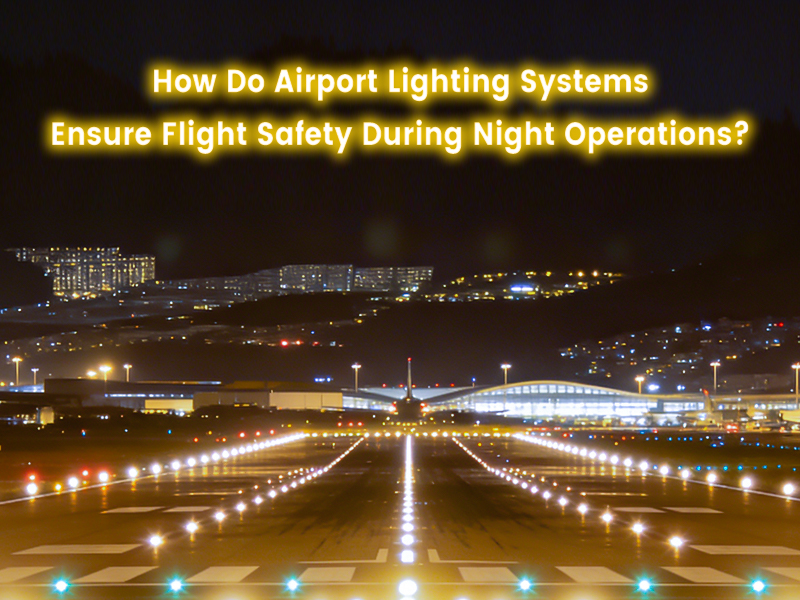
How Do Airport Lighting Systems Ensure Flight Safety During Night Operations?
Introduction
Airport lighting systems provide essential visual guidance for runways and taxiways, especially during night operations and low-visibility conditions.
Runway Lighting System
- Edge Lights: Mark runway boundaries
- Centerline Lights: Maintain alignment
- Threshold Lights: Indicate start/end
- Touchdown Zone Lights: Show landing area
- REIL: Improve runway visibility
Taxiway Lighting System
- Edge Lights: Blue boundary lights
- Centerline Lights: Green guidance lights
Approach Lighting System (ALS)
ALS helps pilots identify the runway and maintain proper approach paths under night or low-visibility conditions.
PAPI/VASI
These systems indicate glide slope using red and white lights.
Supporting Systems
- RWSL: Monitors runway safety
- Obstruction Lights: Mark obstacles
Control and Adjustment
Lighting systems can be controlled by towers or activated by pilots, with brightness adjusted based on visibility.
Light Colors
| Type | Color | Function |
|---|---|---|
| Runway Edge | White/Yellow | Boundary marking |
| Centerline | White/Red | Guidance |
| Threshold | Green/Red | Start/End |
| Taxiway | Blue/Green | Ground navigation |
| PAPI | Red/White | Glide slope |
Conclusion
Airport lighting systems provide essential guidance for safe night operations. Proper planning and maintenance support efficient and safe airport performance.
Why Are More Construction Sites Using Controller and Follower Light Systems?
How to Choose ITE-Compliant & MUTCD-Standard Barricade Lights? Solar vs Battery Barricade Light Comparison
Related Article