

Precision Approach and Runway Lighting Systems: The Core Technical Safeguard of Modern Airport Operations
Introduction:
Precision approach and runway lighting systems are essential to modern airport safety. ICAO-compliant edge and threshold lights, combined with LED optics and solar-grid hybrid power, provide reliable visual guidance for safe landings in all conditions.
Precision Approach and Runway Lighting Systems: The Core Technical Safeguard of Modern Airport Operations
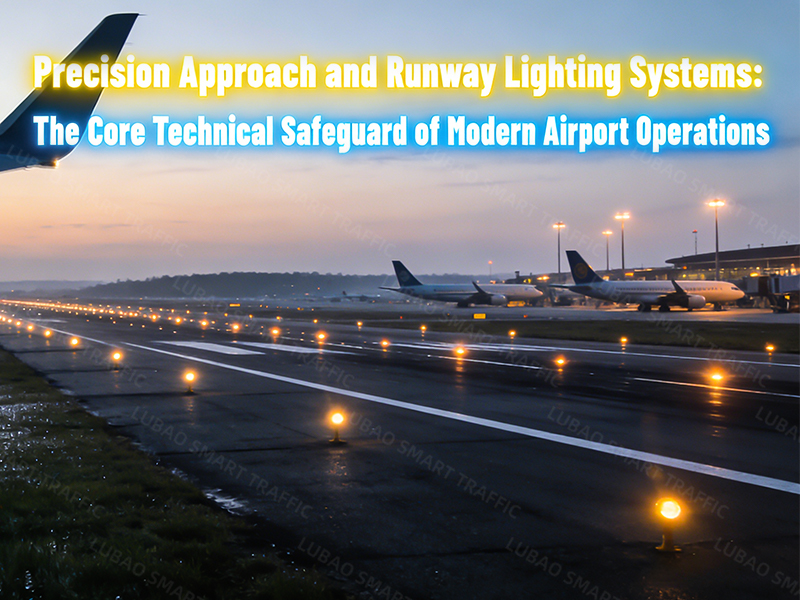
Within the modern air transportation system, airport lighting systems are not merely basic aids for flight operations during night-time or low-visibility conditions; they represent the core technical infrastructure enabling precision approaches, safe landings, and efficient taxiing. The three light fixtures mentioned—"Solar Airfield Runway Edge Light, White," "Runway Edge Light, Bi-Directional, Yellow-White," and "Runway Threshold Light, Bi-Directional, Green-White"—exemplify the lighting standards for distinct functional zones of an airport, collectively forming a rigorous optical guidance network.
I. Zonal Lighting & Color Coding: The International Standard Visual Language
The International Civil Aviation Organization (ICAO), in Annex 14 — Aerodromes, establishes stringent specifications for the color, intensity, and spacing of runway and approach lighting. This "visual language," based on color and direction, is fundamental for pilots to determine position, attitude, and direction during the final approach phase and ground taxiing.
- Runway Edge Lights: Typically installed symmetrically along both sides of the runway to delineate its contours and width clearly.
- White Solar Edge Lights: Commonly found in the mid-section of the runway. Utilizing solar power, they embody the green airport development concept and are particularly suitable for runways with limited power access or requiring rapid deployment. Their consistent white light provides pilots with a continuous reference for the runway boundary.
- Bi-Directional Yellow-White Edge Lights: This is a critical design feature of the runway lighting system. For the last 600 meters or the final third of the runway length (whichever is less), the edge light color changes from white to yellow. This distinct color transition provides pilots with a vital visual distance cue, indicating that the remaining runway length is limited. This information is crucial for spatial awareness, supporting decisions for a go-around or ensuring effective braking after touchdown. The "bi-directional" characteristic ensures the correct color is visible from either direction, facilitating runway operations in both orientations.
- Runway Threshold Lights: Identify the beginning of the runway portion available for landing.
- Bi-Directional Green-White Threshold Lights: Installed at the runway threshold, arranged in a line perpendicular to the runway centerline. The green light is always oriented towards the landing direction, providing an unambiguous "cleared to enter" signal to approaching aircraft. When viewed from the opposite direction, they appear white, indicating that end is the runway end. The "bi-directional" design similarly supports reverse operations. The stark contrast between green and white ensures the threshold location can be rapidly identified against various weather backgrounds.
II. Technical Specifications & Operational Requirements
Modern runway light fixtures are highly integrated and intelligent.
- Light Source & Optics: Light Emitting Diodes (LEDs) are now standard, offering long lifespan, high luminous efficacy, fast response, excellent shock resistance, and easy dimming (typically in 5 steps). Precision optical lens design ensures the beam's horizontal and vertical dispersion angles comply with ICAO standards, providing sufficient guidance intensity while avoiding glare for pilots.
- Structure & Environmental Resilience: Fixtures must possess extremely high mechanical strength to withstand impact from high-speed taxiing aircraft, jet blast, and corrosion from de-icing fluids. An Ingress Protection (IP) rating of at least IP67 is common, ensuring reliable operation in rain, snow, extreme cold, and other harsh conditions.
- Power Supply & Control – The Evolution to Hybrid Systems: Power reliability is paramount. Integrated hybrid power systems, such as the Lubao Smart Solar-Grid Hybrid System, intelligently combine solar energy and mains grid power to guarantee absolute power continuity for critical runway lighting.
III. Synergistic Role in Approach & Landing Procedures
- Transition Phase: Pilots rely on green-white threshold lights to confirm runway alignment during the transition from instrument to visual flight.
- Flare & Touchdown Phase: Yellow-white edge lights provide distance awareness, while white edge lights support height and descent rate judgment.
- Roll-out & Turn-off Phase: Continuous edge lighting ensures safe lateral guidance and alerts pilots to the approaching runway end.
Conclusion: The Convergence of Safety, Efficiency, and Sustainability
Runway edge and threshold lights have evolved into precision air navigation aids integrating optics, electronics, mechanical strength, and intelligent energy management. Supported by resilient hybrid power systems, this standardized grammar of light silently safeguards every takeoff and landing, today and in the future.
Why Solar Aviation Obstruction Lights Are Replacing Traditional Lights
What Is the Helideck Red Light Saying? Offshore Helicopter Safety Explained
Related Article