

Why Are More Construction Sites Using Controller and Follower Light Systems?

Why Are More Construction Sites Adopting Controller and Follower Light Systems?
Introduction
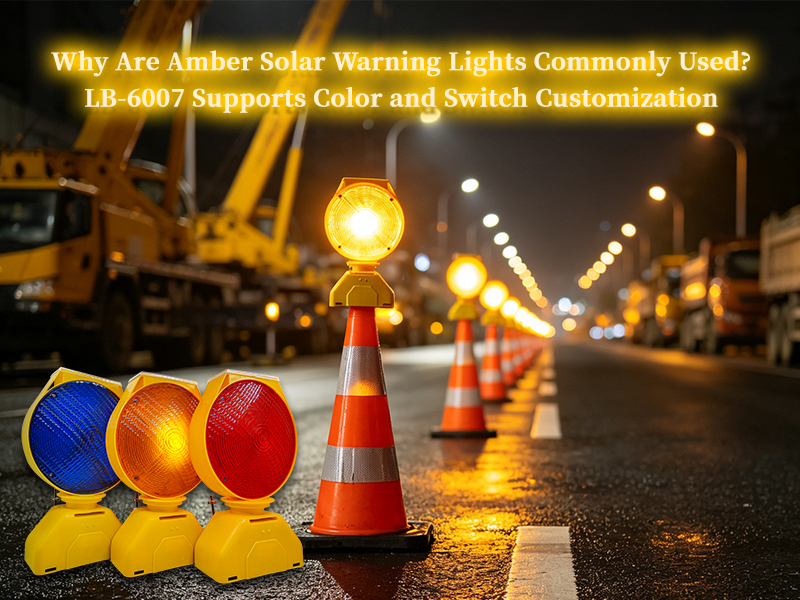
In nighttime construction or road closure scenarios, the visibility of barricade warning lights directly affects traffic safety. Inconsistent or uneven flashing makes it difficult for drivers to quickly assess obstacle locations, increasing accident risk.
To enhance safety and management efficiency, more construction sites and traffic projects are adopting controller and follower light systems. This approach ensures synchronized lighting, improves visibility, and saves time, labor, and operational costs.
System Operation
The controller light serves as the command center for the entire light array, sending signals wirelessly or via wired connections to all follower lights to enable synchronized flashing according to preset modes.
- Flashing modes: Single-color, multi-color alternation, rotating, or pulse patterns, adjustable to meet construction and traffic control needs.
- Smart functions: Photocells or timers allow automatic operation—turning off during the day and activating at night without manual intervention.
In practice, the controller light is placed at the center of the array, coordinating multiple follower lights. Drivers can clearly see construction boundaries from a distance, slow down in time, and navigate safely. Managers do not need to adjust each light individually, saving significant labor and inspection time. In large sites, manual adjustment of each light is labor-intensive, whereas a controller-follower system synchronizes the entire array efficiently with a single device.
Practical Value of the System
- Enhanced visibility: The entire array flashes in unison, greatly improving warning effectiveness.
- Energy saving: Centralized control prevents redundant or ineffective flashing, extending battery life.
- Reduced maintenance costs: No need to adjust lights individually.
- Flexible deployment: Wireless systems allow rapid placement or relocation for temporary or emergency use.
- Time and labor saving: Mode adjustments take seconds, reducing inspections and manual intervention.
- Cost efficiency: Reduces equipment failure and replacement frequency while minimizing potential losses from inadequate warning.
Getting Started
- Select the controller light: Consider control range, wired/wireless method, and power source (battery/solar).
- Arrange the light array: Place the controller light at the center or optimal coverage point, and follower lights around it.
- Configure flashing modes: One operation sets the entire array instantly.
- Regular testing: Ensure all follower lights receive signals and flash according to the preset mode.
Recommended Setup
For practical implementation, examples include LB-5102 wireless LED warning light, LB-6006X solar LED 5-light set, and LB-7000 5-light synchronized/sequential flash LED warning lights. All support synchronized and sequential flashing, with any light acting as the controller while others follow automatically, ideal for road construction, temporary closures, and large nighttime work zones.
Conclusion
Controller and follower light systems significantly enhance safety at construction sites and traffic management zones while saving time, labor, and maintenance costs. Proper deployment is an essential strategy in modern construction and traffic management.
How to Ensure Night Safety? Which is Better for You: LED Rotary Warning Beacon vs Magnetic Warning Beacon?
How Do Airport Lighting Systems Ensure Flight Safety During Night Operations?
Related Article