

How Do Neodymium Magnets Affect LED Road Flares?
How Do Neodymium Magnets Affect LED Road Flares?
LED road flares are commonly used for vehicle breakdowns, roadside assistance, and temporary traffic warnings. A magnetic design allows the light to attach quickly to suitable metal surfaces, making it easier to position the warning light when needed.
Beyond magnetic holding force, the way a magnet is secured inside the light is another important design consideration. Different fixing methods affect how the magnet is held in place and may also involve different processing temperature requirements for neodymium magnets.
How Do Different Magnet-Fixing Methods Affect Reliability?
Some LED road flares use adhesive, recessed slots, or other structural methods to hold magnets inside the housing. During long-term outdoor use, an inadequate fixing structure may allow a magnet to loosen or detach, affecting product reliability.
The LB-182 Series uses a specially designed double structural protection system to secure the magnet inside the light, helping reduce the risk of loosening or detachment over time.
How Does Temperature Affect Injection Overmolding?
Some LED road flares use injection overmolding to secure magnets. Neodymium magnets are sensitive to temperature, and their maximum operating temperatures vary by grade.
Typical maximum operating temperatures for common neodymium magnet grades are listed below:
- N grade: approximately 80°C
- M grade: approximately 100°C
- H grade: approximately 120°C
- SH grade: approximately 150°C
- UH grade: approximately 180°C
- EH grade: approximately 200°C
These figures are general reference values. The actual temperature limits depend on the magnet supplier's specifications.
Higher-temperature grades of neodymium magnets generally cost more. If the actual temperature during injection overmolding exceeds the magnet's temperature limit, irreversible demagnetization may occur, reducing its magnetic strength and holding force.
The LB-182 Series does not use injection overmolding to secure the magnet. Instead, its double structural protection system helps keep the magnet firmly in place while avoiding the processing temperature exposure associated with this particular fixing method. This design may reduce the need for higher-temperature magnet grades and help control material costs.
What Are the Key Features of the LB-182 Series 10-Function LED Road Flares?
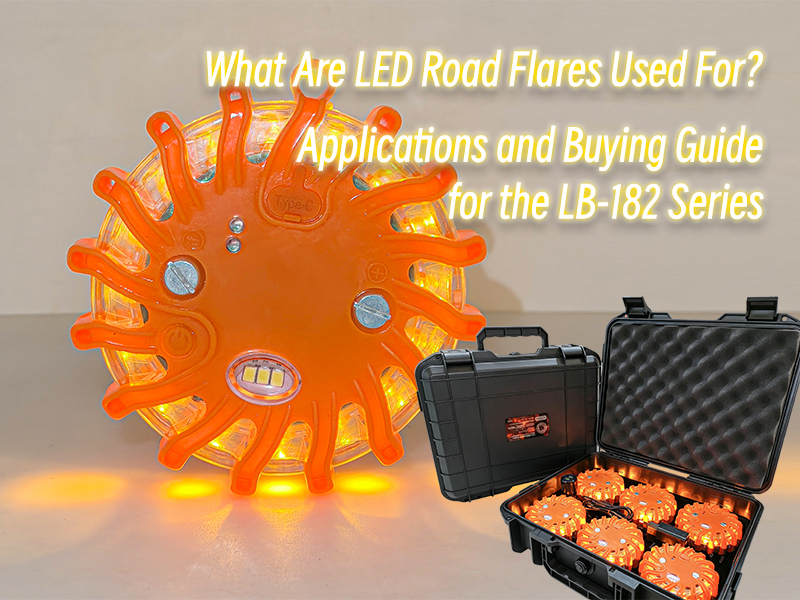
The LB-182 Series combines magnetic performance, secure magnet fixing, and multiple warning modes for applications such as vehicle breakdowns and roadside assistance.
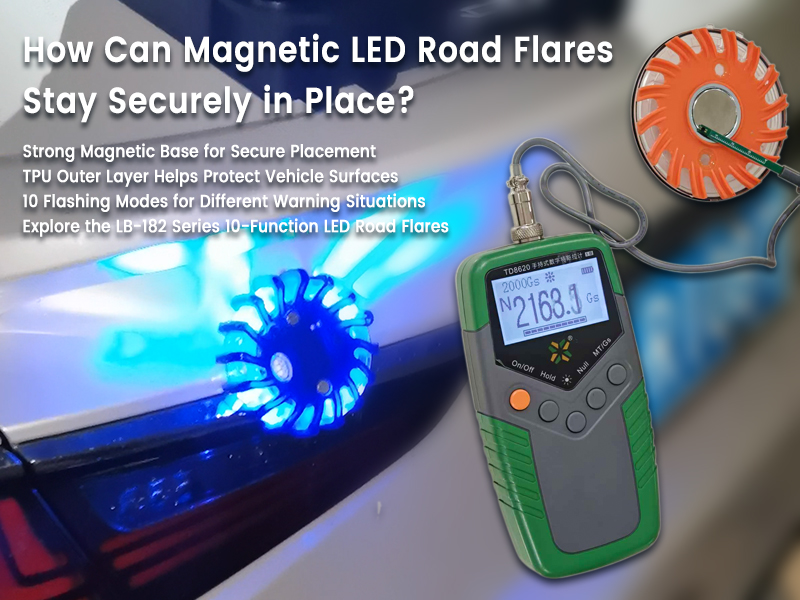
- Magnetic performance: Magnetic holding force greater than 220 N and magnetic flux density greater than 2,000 Gs.
- Double structural protection: Helps secure the magnet inside the light and reduce the risk of loosening or detachment during long-term use.
- TPU outer layer: Helps reduce the risk of scratching vehicle surfaces when the light comes into contact with them.
- 10 operating modes: Includes multiple flashing patterns, SOS, and steady-on modes for different warning needs.
Learn More About the LB-182 Series LED Road Flares
Looking for magnetic LED road flares for vehicle breakdowns and roadside assistance? Explore the LB-182 Series specifications and features to learn more about its design and warning functions.
How Do Rechargeable LED Road Flares Synchronize Flashing?
What Is a LED Road Flare? How Do 4-in-1, 6-in-1 and 10-in-1 Configurations Differ?
Related Article