
How Can Speeding Risks Be Reduced on Cold Climate Roads? What Role Do Radar Speed Display Signs Play?
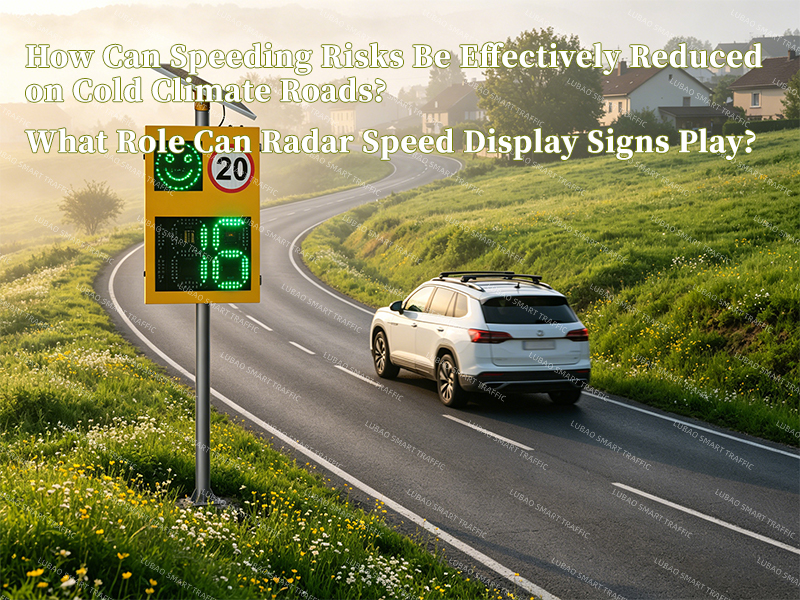
How Can Speeding Risks Be Effectively Reduced on Cold Climate Roads? What Role Can Radar Speed Display Signs Play?
What Is a Radar Speed Display Sign?
A radar speed display sign is an intelligent traffic safety device that integrates radar speed detection with a real-time LED speed display system.
It detects vehicle speed instantly and displays the result on an LED screen, allowing drivers to receive feedback from approximately 300m ahead and adjust their speed in time.
Compared with traditional static traffic signs, it provides real-time speed feedback, early visual warning, and stronger driver behavior influence.
Why Are Cold Climate Roads at Higher Risk?
In cold regions, winter roads are often covered with ice and snow, significantly increasing braking distance and accident risk.
The main issue is not driver behavior, but reduced visibility and limited reaction time caused by snow, fog, and low-light winter conditions.
Traditional traffic signs are often difficult to recognize, while speed enforcement systems only provide post-incident penalties.
Why Is a Radar Speed Display Sign Effective for Winter Road Safety?
The system is designed for harsh environments and operates reliably in temperatures from -20°C to +75°C.
The LED display remains clearly visible in snow, fog, and nighttime conditions, ensuring drivers can recognize speed information from around 300m away.
With a solar-powered design, it can operate independently without grid electricity, making it suitable for remote and rural road environments.
By providing instant feedback, it helps drivers slow down proactively and improves overall traffic safety.
How Does a Radar Speed Display Sign Compare With Traditional Traffic Equipment?
| Feature | Speed Cameras | Static Speed Limit Signs | Radar Speed Display Sign |
|---|---|---|---|
| Function | Post-event enforcement | Static warning | Real-time feedback |
| Speed detection | No | No | Yes |
| Driver response | Penalty-based | Passive reminder | Active behavior guidance |
| Feedback type | Fines | Fixed sign | Dynamic LED display |
| Cold resistance | Limited | Medium | Strong |
| Power supply | Grid required | Grid / solar | Solar independent system |
| Visibility distance | Low | Low | Around 300m |
Recommended Model: LB-SRSD188-9060S
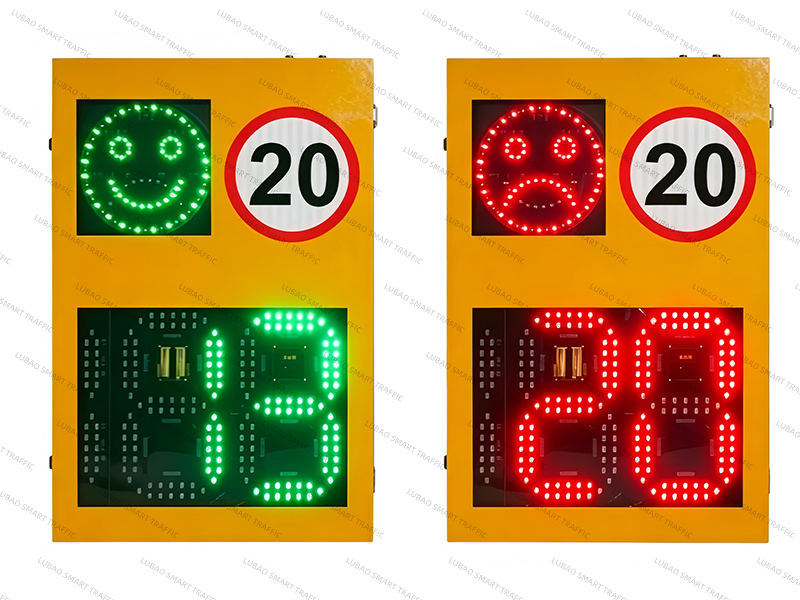
The LB-SRSD188-9060S radar speed display sign is designed for complex road environments and cold climate traffic safety applications.
Structure & Durability
- Durable metal housing for long-term outdoor use
- 3M reflective film for improved visibility and durability
Radar System
- Operating frequency: 24.125 GHz
- Detection distance: up to 120m
- Speed accuracy: ±1 km/h
- Supports 2–3 lane coverage
LED Display System
- Red and green dual-color display
- Standard emoji warning system to enhance driver visual recognition
- Real-time speed visualization for improved driver awareness
Power System
- Solar panel: 18V / 60W
- Battery: 12V / 30Ah LiFePO₄
- Ultra-low power consumption: 4W
- Fully independent solar-powered operation
Environmental Performance
- Operating temperature: -20°C to +75°C
The combination of radar detection, solar power supply, and real-time visual feedback makes this model highly suitable for cold climate road safety projects.
Where Can Radar Speed Display Signs Be Used?
- Urban main roads
- School speed control zones
- Winter icy roads
- Road construction areas
- Industrial parks
- Rural and remote highways
Conclusion
A radar speed display sign provides real-time speed feedback and approximately 300m early warning, effectively improving drivers’ braking response, especially in low-visibility and cold climate road conditions.
With stable radar detection, wide operating temperature range, and independent solar power supply, the LB-SRSD188-9060S solar radar speed display sign can operate reliably in complex road environments, making it a dependable traffic safety solution.
Inquiry & Custom Solutions
For detailed specifications, project proposals, or customized solutions, please feel free to contact us.
LED, LCD or Solar VMS? How to Choose Based on Technical Specs and Hidden Costs
What Does a Round Traffic Sign Mean?
Related Article