

How to Choose the Right Road Studs? Consider Price, Load Capacity, and Application
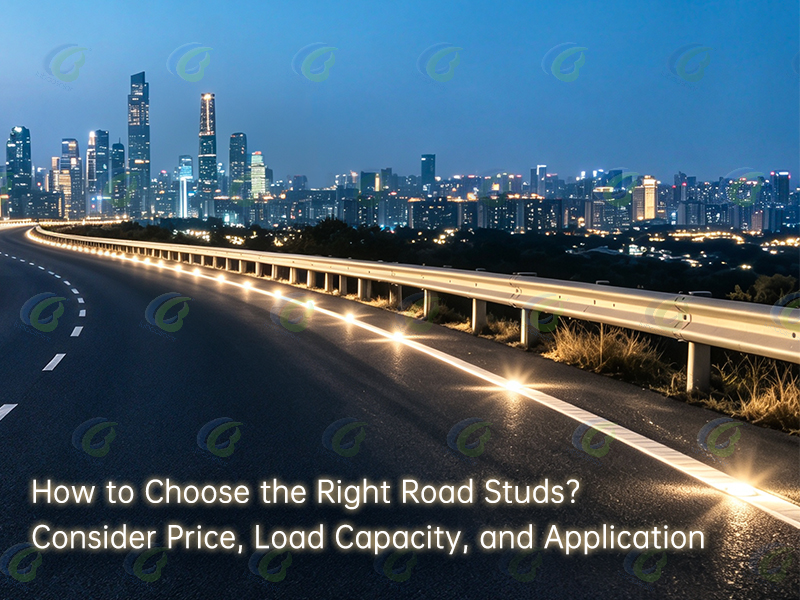
How to Choose the Right Road Studs? Consider Price, Load Capacity, and Application
When purchasing road studs, price is usually one of the first factors considered. For larger projects, even a small price difference per unit can add up quickly.
Road stud prices are generally influenced by material, construction, features, and application.
For example, studs installed along road edges or lane markings have different requirements from those exposed to repeated vehicle traffic. The former may focus more on visibility and reflectivity, while the latter require greater structural strength and load capacity.
Price matters, but the right choice also depends on how and where the road studs will be used.
When Are Lower-Priced Road Studs a Good Choice?
A lower-priced product is not necessarily unsuitable.
For road edges, lane markings, and other areas where vehicles do not drive directly over the studs, a reasonably priced reflective or solar road stud may be sufficient.
For areas with repeated vehicle traffic, load capacity and structural design become more important. Differences in material, construction, and load rating can also explain why similar-looking road studs have different prices.
A lower purchase price may also mean higher replacement costs if the product is not suited to the application.
How Does the Installation Location Affect Road Stud Selection?
The installation location directly affects the type of road stud needed.
Road edges, lane markings, and traffic separation areas generally focus on reflective or illuminated visibility. Depending on the project, reflective road studs or solar road studs may be suitable.
Parking lots, entrances, exits, and areas with regular vehicle traffic require more attention to traffic conditions and load capacity.
Material, construction, and load capacity should be considered based on the actual installation environment.
Why Do Road Stud Prices Vary So Much?
Road stud prices are mainly influenced by material, construction, and features.
From plastic to aluminum, different materials offer different costs, weights, and structural characteristics. Reflective road studs are mainly used for road delineation and nighttime visibility, while solar road studs add solar charging, energy storage, and LED lighting components.
Even aluminum road studs can vary in price because of differences in structural design and load capacity.
Most of our road stud models comply with relevant requirements or certifications such as ASTM D4280, EN 1463-3, FCC, IC, and RoHS.
When comparing quotations, look at what is different between the products and which features the project actually needs.
How Should You Evaluate Load Capacity?
For road studs that vehicles will drive directly over, load capacity is an important specification.
Road studs on the market may be rated at 10 tons, 20 tons, 30 tons, 50 tons, or higher. This rating provides a useful indication of structural strength when comparing different models.
Material, structural design, and installation conditions also affect performance.
For areas with frequent vehicle traffic, choose a road stud designed for direct vehicle loading. Where vehicles do not drive directly over the studs, a high-load model may not be necessary.
Load capacity is important, but it should be considered together with the actual application.
What Else Should You Consider Besides Price?
For larger projects, a slightly higher upfront price does not necessarily mean higher overall costs.
A product that performs well under actual conditions and lasts longer may require fewer replacements. In contrast, frequent replacement can add transportation, labor, and installation costs.
This can be especially important for roads, parking lots, and entrances or exits where replacing installed road studs requires additional work.
When comparing road studs, consider both the purchase price and expected service life.
How to Choose the Right Road Studs?
There is no single road stud that fits every project.
We offer road studs from plastic to aluminum and from reflective road studs to solar road studs, along with heavy-duty models designed for areas where vehicles drive directly over the studs.
Different models can be selected according to the installation environment, traffic conditions, required features, and applicable standards.
If you are choosing road studs for a project, tell us the installation location, traffic conditions, and project requirements, and we can help you select a suitable product.
Related Article