


what do airport runway lights mean
author: Aaron
2024-12-10
Airport runway lights have several important meanings:
1. Threshold Lights

-
These are located at the beginning of the runway, on either side. They are usually green in color. Their purpose is to clearly mark the threshold or the start of the area where an aircraft is intended to touch down during landing. For example, when a pilot is approaching a runway for landing, the green threshold lights provide a visual cue to help them accurately position the aircraft for touchdown.
2. Runway Edge Lights
-
Runway edge lights are white in color. They run along the length of the runway on both sides. Their primary function is to outline the edges of the runway, making it visible to pilots during take - off, landing, and taxiing. In low - visibility conditions such as fog or at night, these lights are crucial. For instance, if a pilot is taking off and needs to stay within the boundaries of the runway, the runway edge lights provide a clear demarcation of the usable runway area.
-
On precision approach runways (runways with instrument landing systems), the runway edge lights on the last 2,000 feet (or the approach end) of the runway are yellow instead of white. This change in color alerts pilots that they are approaching the end of the runway during landing and need to be prepared to touchdown and decelerate.
3. Centerline Lights
-
The centerline lights are installed along the center of the runway. They are usually white in color, except for the last 3,000 feet of the runway (for runways that are 4,000 feet or longer). In this last section, the centerline lights alternate between red and white. As the aircraft approaches the end of the runway during landing, the red - and - white alternating lights give a visual indication to the pilot that they are getting closer to the end of the runway and need to slow down and stop.
-
During take - off, the centerline lights help the pilot keep the aircraft centered on the runway for a straight - line acceleration.
4. Touch - Down Zone Lights (TDZL)
-
These lights are located in the touchdown zone of the runway, which is the first 3,000 feet of the runway (starting from the threshold). They are white and are designed to provide extra visual guidance to pilots during landing, helping them to judge the correct height and distance for touchdown.
5. Runway End Identifier Lights (REIL)
-
Runway end identifier lights are installed at the far end of the runway. They are usually two synchronized flashing lights, one on each side of the runway. They are used to help pilots identify the end of the runway, especially in situations where there may be other runway or taxiway intersections that could cause confusion. For example, in a complex airport layout with multiple runways and taxiways, the REILs make it clear to the pilot which runway they are approaching or departing from.
Understanding Obstruction Lights: A Type, AB Type, B Type, C Type, and D Type (ICAO Annex 14 Standards)
Lubao LB-AOB01 Low Intensity Red Aviation Obstruction Light
Related Article

Why are red and white aviation obstruction lights needed for tall structures? The LB-MI-AB-B3-L uses LED technology and dual-color lighting to provide reliable aviation warning for towers, buildings, chimneys, and wind turbines.
Why Are Red and White Aviation Obstruction Lights Important for Tall Structures?

Learn why towers and buildings use Medium Intensity Aviation Obstruction Lights. Discover LED aviation obstruction light applications, selection tips, and the GZ-155 warning light solution.
Why Towers and Buildings Commonly Use Medium Intensity Aviation Obstruction Lights?
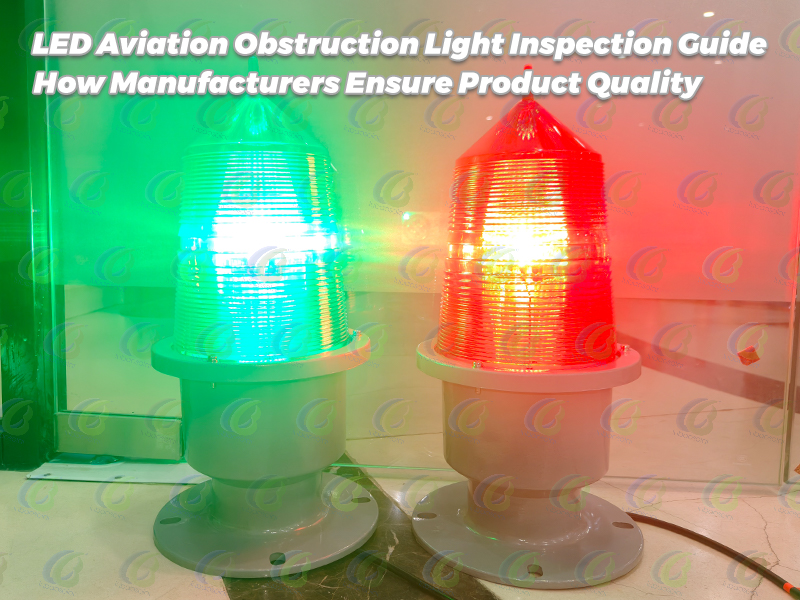
Learn how an LED Aviation Obstruction Light Manufacturer ensures product quality through 100% pre-shipment inspection, including appearance checks, LED testing, electrical inspection, and quality control procedures.
LED Aviation Obstruction Light Inspection Guide: How Manufacturers Ensure Product Quality
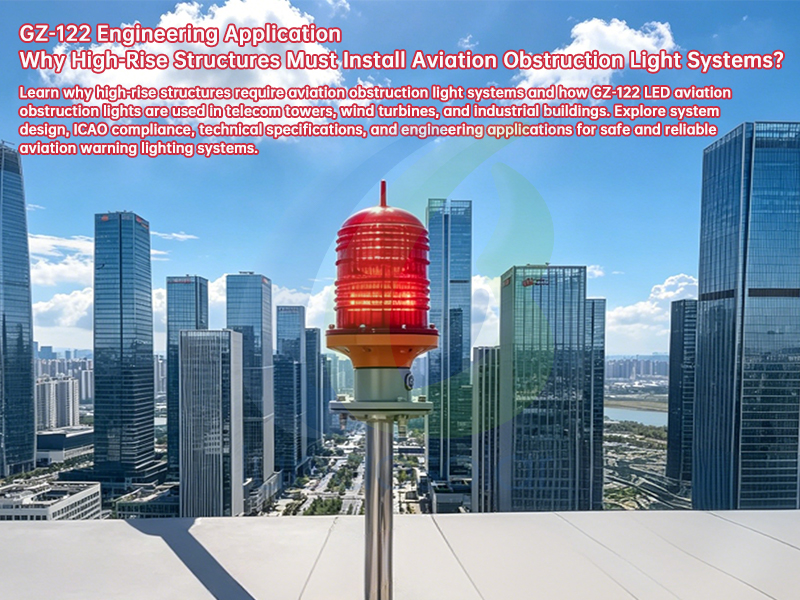
Learn why high-rise structures require aviation obstruction light systems and how GZ-122 LED aviation obstruction lights are used in telecom towers, wind turbines, and industrial buildings. Explore system design, ICAO compliance, technical specifications, and engineering applications for safe and reliable aviation warning lighting systems.
Why High-Rise Structures Must Install Aviation Obstruction Light Systems? — GZ-122 Engineering Application