


Choosing the Right Spacing for Solar-Powered Road Studs: 18-Meter vs 12-Meter Spacing for Different Road Types
author: Eng.Jose
2025-02-12

Choosing the Right Spacing for Solar-Powered Road Studs:
18-Meter vs 12-Meter Spacing for Different Road Types
Introduction:
When planning road safety and lane guidance systems, one important consideration is the spacing between solar-powered road studs. The spacing between the studs can affect visibility and the safety of drivers, especially on high-traffic or high-speed roads. In this article, we compare the effectiveness of 18-meter spacing versus 12-meter spacing for different types of roads, including heavy-duty roads, highways, and urban areas.
Key Factors for Heavy-Duty Roads and High-Speed Highways:
-
Traffic Volume & Vehicle Types:
-
Heavy-duty roads carry a high volume of traffic, including large vehicles like trucks, buses, and freight vehicles. The speed and mass of these vehicles can affect how visible road markers are, especially at night or during adverse weather conditions.
-
On such roads, larger, more frequent markers may be necessary to ensure continuous visibility, especially for large vehicles like trucks, which can obscure markers that are spaced too far apart.
-
-
Spacing Requirements:
-
The 18-meter spacing is commonly used for roads with moderate traffic, where vehicle speeds are lower, and traffic volume is less intense. This spacing works well on standard highways or rural roads where vehicles can clearly see the road markers.
-
However, for heavy-duty roads or high-speed highways, where large vehicles travel at higher speeds, closer spacing may be needed for better visibility. 12-meter spacing ensures that the road studs remain visible even at higher speeds or when vehicles are traveling at closer intervals.
-
-
Compressive Strength and Durability:
-
On heavy-duty roads, road markers must withstand impacts from heavy trucks and frequent braking. This means the studs need to be robust, designed with high compressive strength (able to endure up to 30 tons of weight or more).
-
Solar-powered road studs should also be durable, ensuring they remain intact even under the pressure of heavy vehicles and frequent traffic.
-
-
Lighting and Reflectivity:
-
Solar-powered road studs are beneficial for low-visibility conditions, providing constant lighting through LEDs or reflective panels. On roads with heavy-duty traffic, it is essential to ensure that the studs provide sufficient brightness and visibility under all environmental conditions, including rain, snow, or fog.
-
Red-colored studs are often used for hazard or warning markers, especially at curves or intersections, while yellow or white studs are used for lane boundaries. Flashing red studs may be used for more urgent warnings.
-
-
Installation Method:
-
On heavy-duty roads, it is recommended to use embedded installations (no screws required) for better durability and stability. This ensures that the studs stay in place despite the constant movement of heavy vehicles. The type of glue and the installation depth should be chosen carefully to ensure the studs do not get displaced over time.
-
18-Meter Spacing vs 12-Meter Spacing:
1. 18-Meter Spacing:
Suitable for:
-
Standard highways or roads with moderate traffic volume.
-
Low-speed roads (e.g., urban roads, rural roads).
-
Roads with limited heavy-duty traffic.
Usage:
-
18-meter spacing is commonly used for general lane markings on roads with moderate traffic, providing effective visibility for normal speeds (typically under 100 km/h). It’s most suitable for non-urban roads with limited intersections or complex curves.
Pros:
-
Works well for standard highways with lower traffic or rural roads where moderate visibility is sufficient.
Cons:
-
May not be sufficient for high-traffic or high-speed roads, especially where large vehicles could obscure the markers or where quick lane changes are needed.
2. 12-Meter Spacing:
Suitable for:
-
Heavy-duty roads with high traffic volume, including trucks and buses.
-
High-speed roads or multi-lane highways.
-
Roads that require precise lane guidance or are subject to frequent lane changes (e.g., urban roads).
Usage:
-
For high-speed highways or heavy-duty roads, 12-meter spacing ensures better visibility and continuous lane guidance, even when large vehicles pass over or obscure the markers. It is especially effective in areas with complex road configurations or frequent turns.
Pros:
-
More frequent markers improve visibility for fast-moving vehicles, especially in high-traffic areas where quick decisions are necessary (such as highway curves and interchanges).
-
Reduced spacing ensures the markers are visible even in conditions of high-speed traffic.
Cons:
-
May require increased installation costs or maintenance due to the denser marker layout.
Conclusion:
Both 18-meter spacing and 12-meter spacing have their applications depending on the road type, traffic volume, and speed. For heavy-duty roads, the 12-meter spacing is generally preferred because it provides better visibility and ensures continuous lane guidance, especially for large vehicles and high-speed traffic. On standard highways or roads with moderate traffic, the 18-meter spacing can still be effective, but for high-traffic, high-speed, or heavy-duty conditions, reducing the spacing to 12 meters may be essential to maintain consistent safety and guidance.
Ultimately, the ideal spacing should be determined based on specific road conditions, the volume of traffic, and the visibility requirements for safety. Solar-powered road studs, with the right spacing and proper installation, can greatly enhance safety on both standard and heavy-duty roads.
Choosing the Right Polycarbonate for Solar Road Studs: Key Features, Material Selection, and Manufacturing Best Practices
Durable Solar Road Markers: Perfect for High-Traffic Lanes and Extreme Environments
Related Article
Wired LED Road Studs provide stable illumination and reliable road guidance for highways, tunnels, and traffic engineering projects with durable design and reduced maintenance needs.
Why Wired LED Road Studs Are Ideal for Highway and Tunnel Applications?
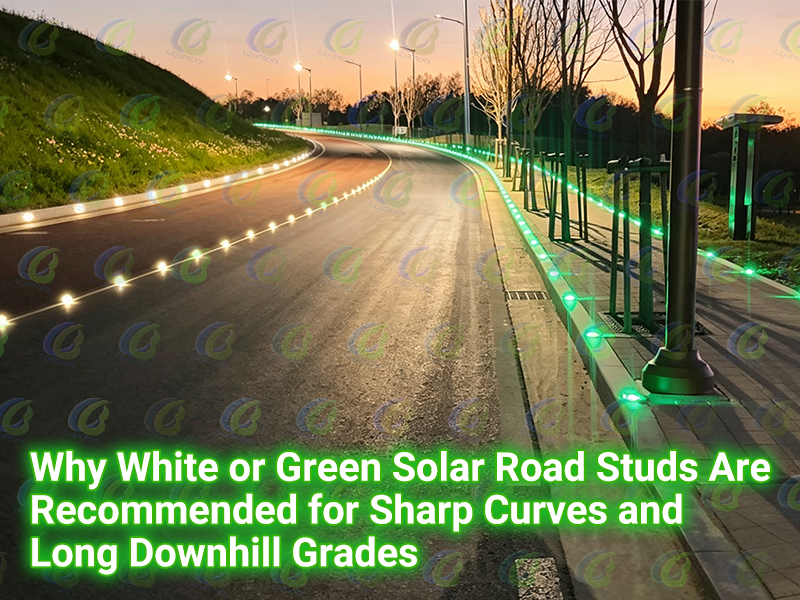
Road safety manufacturer explains solar road stud color selection for sharp curves and long downhill sections. Compare white, green, amber, and red light performance under low illumination and foggy conditions. Custom solutions available.
Roadway Delineation: Why White or Green Solar Road Studs Are Recommended for Sharp Curves and Long Downhill Grades
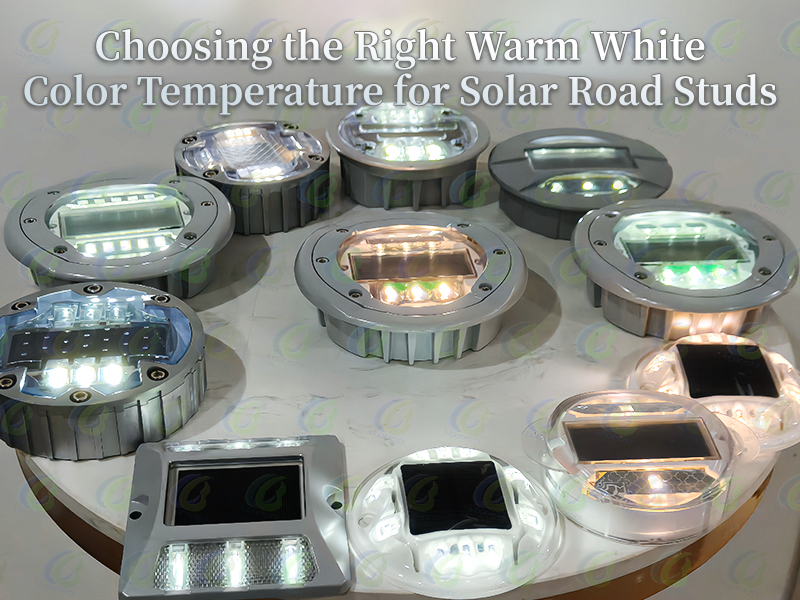
Discover the difference between 6000K, 4000K, 3000K, and 2500K solar road stud color temperatures. Learn how to choose the best warm white solar road studs for highways, cycle lanes, pedestrian pathways, parks, and landscape lighting projects.
Choosing the Right Warm White Color Temperature for Solar Road Studs
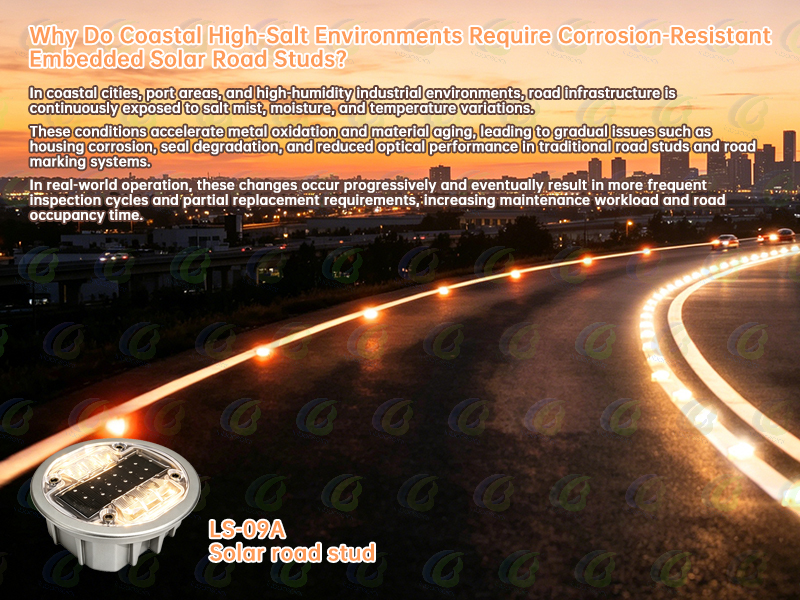
Coastal high-salt environments accelerate road infrastructure corrosion. Embedded solar road studs with corrosion-resistant materials and IP68 protection help improve night visibility and extend maintenance cycles.
Why Do Coastal High-Salt Environments Require Corrosion-Resistant Embedded Solar Road Studs?