

Enhancing Road Safety: The Role of Solar Road Studs Under Streetlights
author: Eng Wu.
2024-12-30

Enhancing Road Safety: The Role of Solar Road Studs Under Streetlights
Solar Road Studs: Enhancing Nighttime Safety
Installing solar road studs beneath streetlights enhances road visibility and safety, especially during nighttime or adverse weather conditions. While streetlights provide general illumination, they may leave certain areas inadequately lit. Solar road studs offer clear visual guidance, assisting drivers in accurately identifying lanes and road edges, thereby reducing accident risks.
Global Standards for Road Lighting Illuminance
International standards for road lighting illuminance vary based on road classification. For instance, the Illuminating Engineering Society (IES) provides guidelines in ANSI/IES RP-8-22 for roadway lighting design. Additionally, the European standard EN 13201 outlines lighting requirements for different road types. These standards recommend specific illuminance levels to ensure adequate visibility for drivers and pedestrians. ANSI Blog

Luminous Intensity of Solar Road Studs
Regarding the luminous intensity of solar road studs, it's typically measured in millicandelas (mcd). High-quality solar road studs often feature luminous intensities ranging from 3,000 to 5,000 mcd, ensuring they are sufficiently bright to be visible to drivers from a distance. For example, certain models offer luminous intensities of approximately 5,000 mcd, providing effective guidance on roadways.
Regarding the luminous intensity of solar road studs, it's typically measured in millicandelas (mcd). High-quality solar road studs often feature luminous intensities ranging from 3,000 to 5,000 mcd, ensuring they are sufficiently bright to be visible to drivers from a distance. For example, certain models offer luminous intensities of approximately 5,000 mcd, providing effective guidance on roadways.
Therefore, selecting solar road studs with a luminous intensity of at least 3,000 mcd is advisable to ensure adequate brightness and road safety under various conditions.
Why Illuminate Pavement Road Markers Need Waterproofing and Must Always Be IP68 Rated
Raised Pavement Markers - Solar Powered & Smart Standby Road Line Marking Solution
Related Article
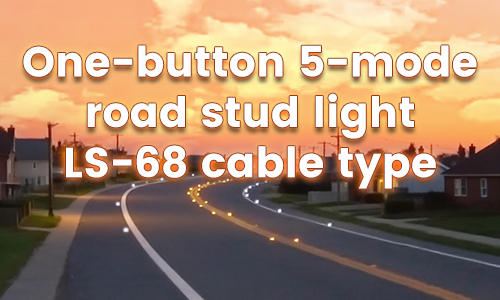
Wired LED Road Studs provide stable illumination and reliable road guidance for highways, tunnels, and traffic engineering projects with durable design and reduced maintenance needs.
Why Wired LED Road Studs Are Ideal for Highway and Tunnel Applications?
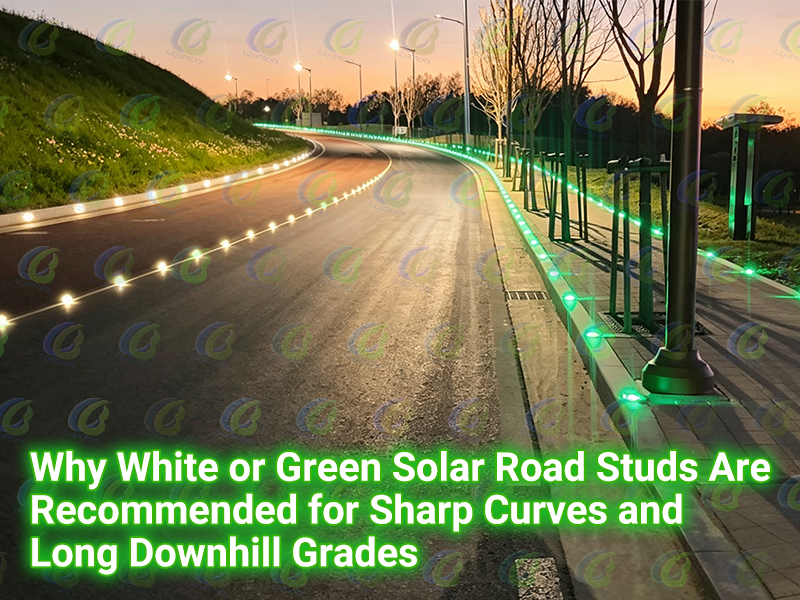
Road safety manufacturer explains solar road stud color selection for sharp curves and long downhill sections. Compare white, green, amber, and red light performance under low illumination and foggy conditions. Custom solutions available.
Roadway Delineation: Why White or Green Solar Road Studs Are Recommended for Sharp Curves and Long Downhill Grades
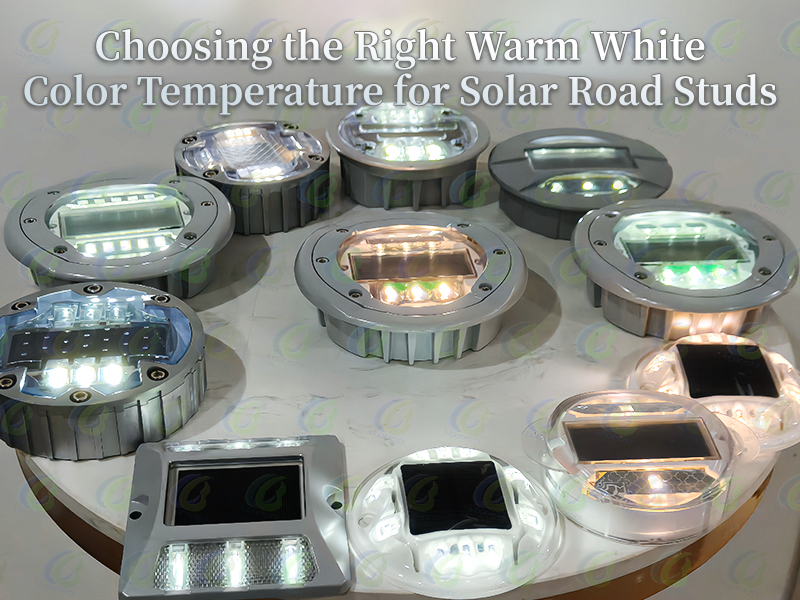
Discover the difference between 6000K, 4000K, 3000K, and 2500K solar road stud color temperatures. Learn how to choose the best warm white solar road studs for highways, cycle lanes, pedestrian pathways, parks, and landscape lighting projects.
Choosing the Right Warm White Color Temperature for Solar Road Studs
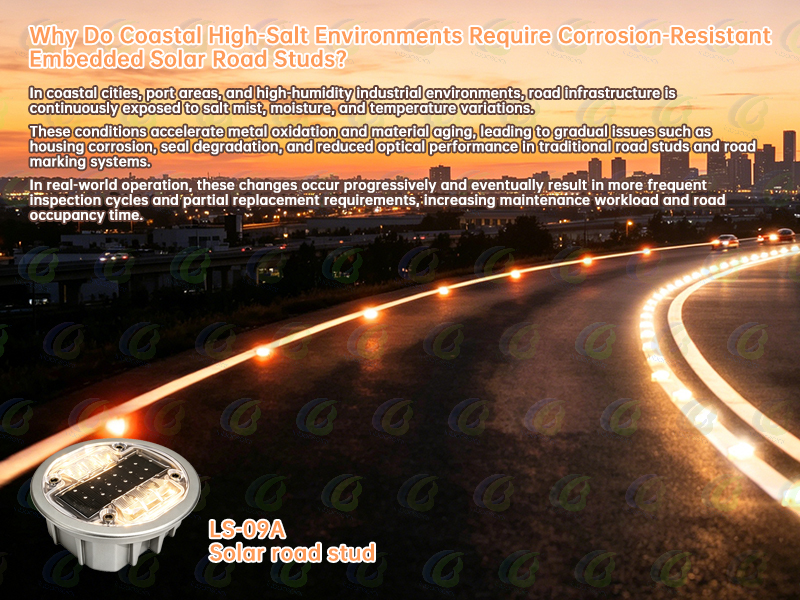
Coastal high-salt environments accelerate road infrastructure corrosion. Embedded solar road studs with corrosion-resistant materials and IP68 protection help improve night visibility and extend maintenance cycles.
Why Do Coastal High-Salt Environments Require Corrosion-Resistant Embedded Solar Road Studs?