

Understanding the Strength of Solar Road Studs: How to Choose the Right Pavement Markers for Your Road
author: Eng.Jose
2025-01-09

Understanding the Strength of Solar Road Studs: How to Choose the Right Pavement Markers for Your Road
When it comes to choosing solar road studs for various road applications, one common question that arises is about the strength and load-bearing capacity of these markers. Factories often state that internally illuminated raised pavement markers (IIRPM) can handle loads of 20 tons, 30 tons, or even 50 tons. But how do we determine if these markers are suitable for specific roads, especially when considering factors such as traffic volume and road type?
In general, solar road studs or pavement markers are categorized based on where they are to be installed. If these markers are placed in locations such as parks, road edges, or areas with minimal vehicle traffic, the load requirements are relatively low. In such cases, the selection of either raised LED pavement markers or internally illuminated raised pavement markers is mostly dependent on their ability to provide adequate lighting and be fully waterproof.
However, when installing these markers in areas where heavy traffic or larger vehicles are expected, such as road lanes, crossings, and highways, it's crucial to ensure that the pavement markers can withstand the pressure of passing vehicles. This brings us to the importance of understanding the relationship between the road's conditions and the solar road stud's strength.
Calculating the Load-Bearing Capacity of Solar Road Studs
To help understand how much weight a specific solar road stud can bear, let's break down a formula used for calculating the force (in kN) exerted by a vehicle on the pavement marker.
The formula for calculating the force in KN/0.1s is:

Example Calculation:
Let’s assume the following parameters:
-
Speed = 60 km/h
-
Vehicle Weight = 25 tons (for a heavy-duty vehicle)

Interpreting the Result:
This calculation shows that the force exerted on the solar road stud by a 25-ton vehicle moving at 60 km/h is approximately 416.75 kN/0.1s.
How Does This Apply to Your Road Conditions?
Let’s say the factory claims that a particular pavement marker can bear 50 tons. If your road conditions involve a 25-ton vehicle moving at 60 km/h, the solar road stud that can handle 416.75 kN/0.1s should be more than adequate for your application.
In this case, it’s essential to match the road's conditions (such as vehicle weight and speed) with the specifications of the solar road stud you're using. If the factory specifies a 50-ton load-bearing capacity, and your application requires handling only 25 tons, you are likely using a suitable marker.
Conclusion
When choosing solar road studs for road installations, especially in areas with varying traffic loads, it’s essential to understand the strength and load-bearing capacity of the markers. By calculating the force exerted by vehicles on the pavement markers, you can ensure that you select a road stud that meets the specific requirements of your road conditions. For roads with heavy-duty traffic, always ensure that the pavement markers can handle the expected load to maintain road safety and functionality.
If you're unsure about the best option for your needs, always consult with the manufacturer to ensure that the solar road studs are suitable for the traffic conditions and provide the necessary durability.
How to Solve the Solar Studs Off Lighting When the Vehicles Passing the Two-Way Road Lanes?
Ensuring Continuous Power for Solar Road Studs: Overcoming Storage and Environmental Challenges
Related Article
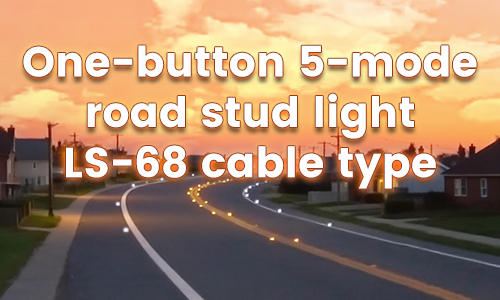
Wired LED Road Studs provide stable illumination and reliable road guidance for highways, tunnels, and traffic engineering projects with durable design and reduced maintenance needs.
Why Wired LED Road Studs Are Ideal for Highway and Tunnel Applications?
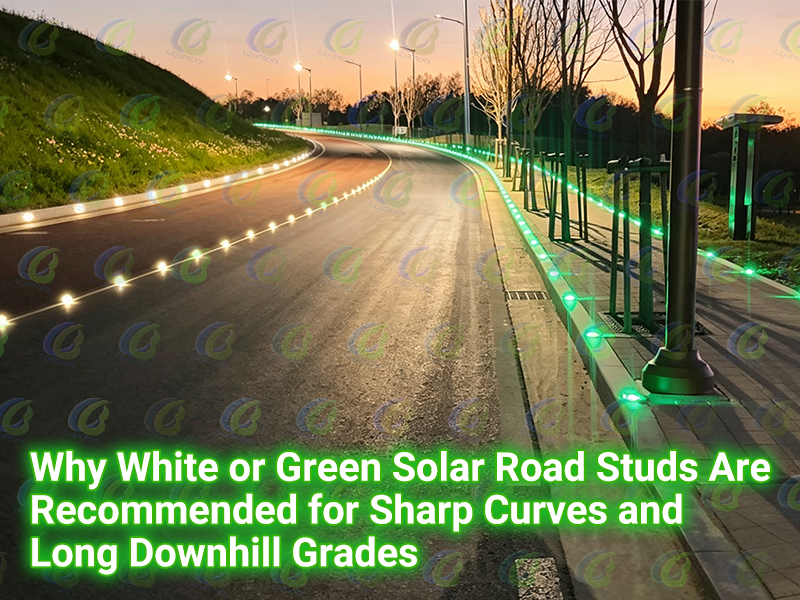
Road safety manufacturer explains solar road stud color selection for sharp curves and long downhill sections. Compare white, green, amber, and red light performance under low illumination and foggy conditions. Custom solutions available.
Roadway Delineation: Why White or Green Solar Road Studs Are Recommended for Sharp Curves and Long Downhill Grades
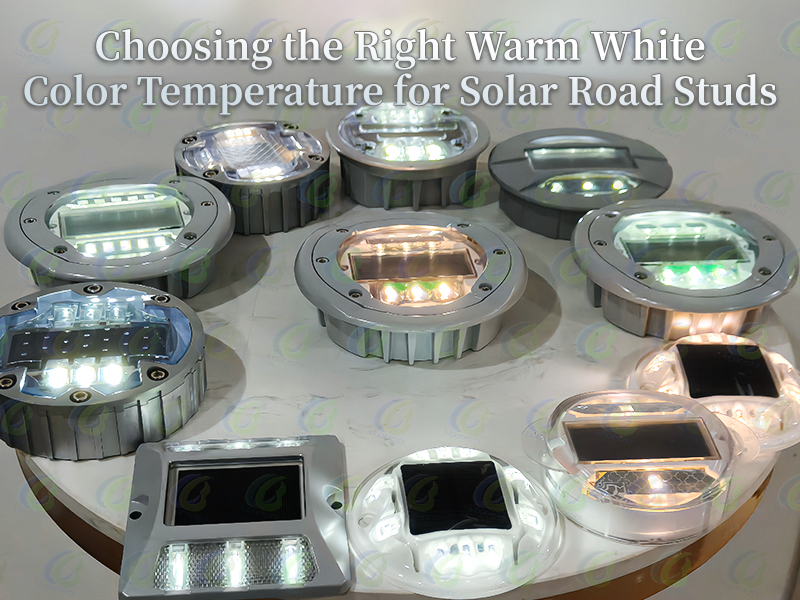
Discover the difference between 6000K, 4000K, 3000K, and 2500K solar road stud color temperatures. Learn how to choose the best warm white solar road studs for highways, cycle lanes, pedestrian pathways, parks, and landscape lighting projects.
Choosing the Right Warm White Color Temperature for Solar Road Studs
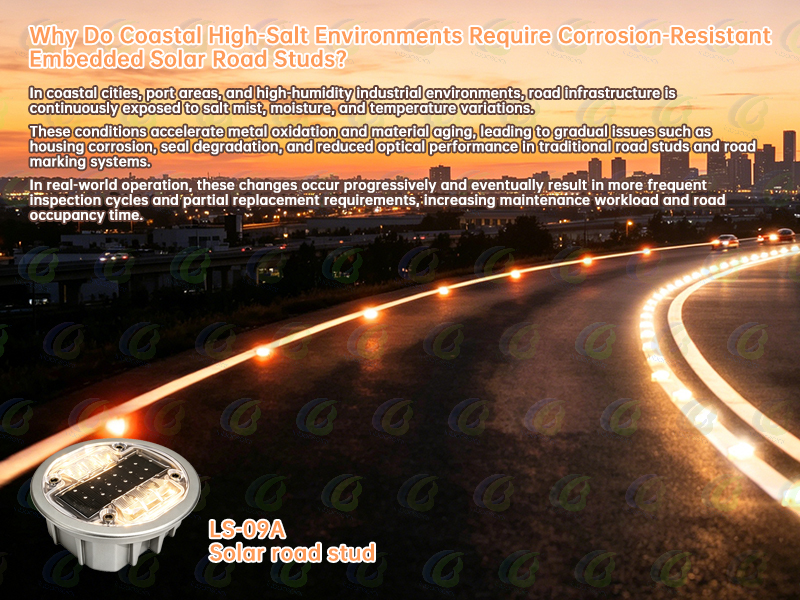
Coastal high-salt environments accelerate road infrastructure corrosion. Embedded solar road studs with corrosion-resistant materials and IP68 protection help improve night visibility and extend maintenance cycles.
Why Do Coastal High-Salt Environments Require Corrosion-Resistant Embedded Solar Road Studs?