

Revolutionizing Road Markings: Combining Traditional Lines with Solar and Lighting Innovations
author: Eng.Chui
2024-12-01

Revolutionizing Road Markings: Combining Traditional Lines with Solar and Lighting Innovations
Road markings are vital for ensuring safe and efficient traffic flow, guiding drivers, and reducing accidents. While traditional pavement markings such as broken lines and solid lines serve fundamental purposes, integrating modern technologies like solar road studs and freezing lighting indicators significantly enhances their functionality. This article explores the meaning of these markings and how innovative solutions are transforming road safety.
The Significance of Broken and Solid Lines
Broken or Dotted Line Markings
Broken or dotted lines are essential for managing dynamic traffic flows. Here's what they indicate:
-
Lane Separation: These lines separate lanes moving in the same direction and signal where lane changes are permitted.
-
Passing Zones: They indicate areas where overtaking is allowed if the road is clear.
-
Intersections and Merging Areas: Dotted lines help guide vehicles through intersections or into merging lanes.
Solid Line Markings
Solid lines convey restrictions and guide traffic more strictly:
-
Solid White Lines: Define lanes moving in the same direction, discourage lane changes, and mark the road's shoulder.
-
Solid Yellow Lines: Separate traffic traveling in opposite directions and usually prohibit crossing for safety reasons.
Enhancing Markings with Solar and Lighting Innovations
Solar-Powered Raised Pavement Markers
Solar road studs have emerged as game-changers in enhancing the visibility of road markings:
-
White Solar Road Markers: Positioned alongside broken white lines, they illuminate the centerline, improving visibility during nighttime or adverse weather conditions.
-
Energy Efficiency: Solar studs are self-sustaining, charging during the day and lighting up at night without external power sources.
-
Durability and Reliability: Designed to endure high-traffic and harsh environments, these markers provide long-term safety improvements.
Freezing Lighting Indicators
Freezing lighting technology adds an interactive layer to road markings, ensuring safety in real-time:
-
White Freezing Lights: Used along solid white lines to guide drivers and prevent unintentional lane departures in challenging conditions.
-
Yellow Freezing Lights: Paired with solid yellow lines, they provide warnings for hazardous conditions, such as icy roads or approaching oncoming traffic.
-
Dynamic Safety Alerts: These lights can flash or change colors, instantly conveying road hazards to drivers.
White and Yellow Lines: The Backbone of Traffic Safety
White Lines
White lines dominate roadways, ensuring clarity and order:
-
Broken White Lines: Enable safe lane changes and passing zones.
-
Solid White Lines: Define road edges and discourage lane crossing to enhance safety.
Yellow Lines
Yellow lines signify traffic moving in opposite directions:
-
Broken Yellow Lines: Allow passing when conditions are safe.
-
Solid Yellow Lines: Prohibit crossing and highlight traffic dangers, such as head-on collision risks.
The Future of Road Markings
The integration of solar-powered markers and freezing lighting indicators with traditional road markings represents a paradigm shift in road safety:
-
Increased Visibility: Enhanced night and weather performance through solar illumination.
-
Real-Time Alerts: Freezing lights dynamically respond to hazards, providing immediate warnings.
-
Hybrid Systems: Combining white and yellow lines with these technologies creates safer, more intuitive roads.
Conclusion
Pavement markings are evolving to meet the demands of modern traffic safety. The combination of traditional lines, solar road studs, and freezing lighting indicators offers a revolutionary approach to enhancing visibility and communication on the road. By adopting these innovations, we can reduce accidents, improve traffic flow, and make roads safer for all users.
How Red Pavement Markings and Reflective Road Technology Enhance
Discover the Various Types of Road Studs: How Many Do You Know?
Related Article
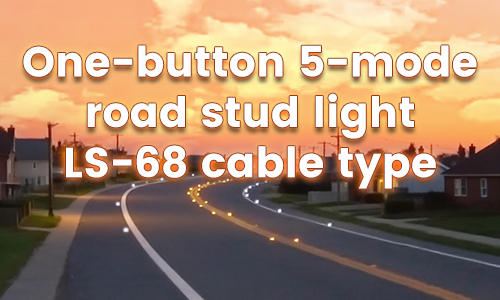
Wired LED Road Studs provide stable illumination and reliable road guidance for highways, tunnels, and traffic engineering projects with durable design and reduced maintenance needs.
Why Wired LED Road Studs Are Ideal for Highway and Tunnel Applications?
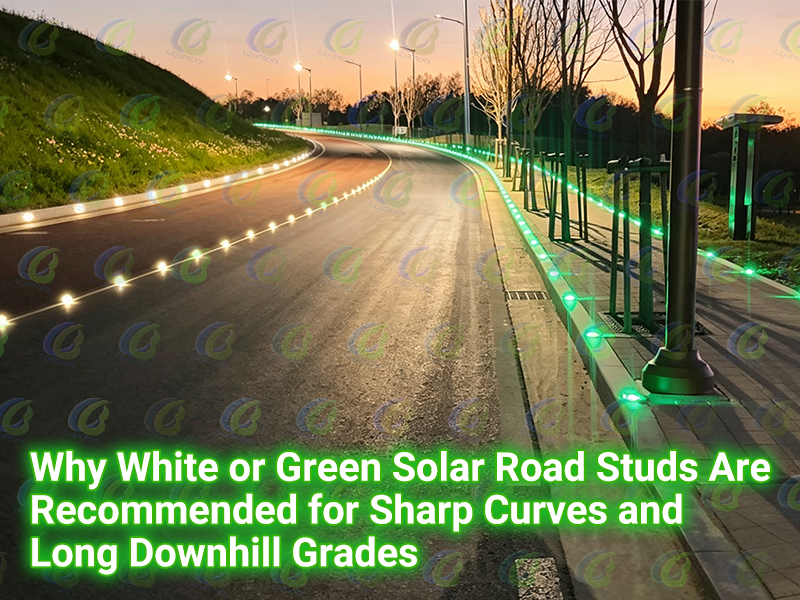
Road safety manufacturer explains solar road stud color selection for sharp curves and long downhill sections. Compare white, green, amber, and red light performance under low illumination and foggy conditions. Custom solutions available.
Roadway Delineation: Why White or Green Solar Road Studs Are Recommended for Sharp Curves and Long Downhill Grades
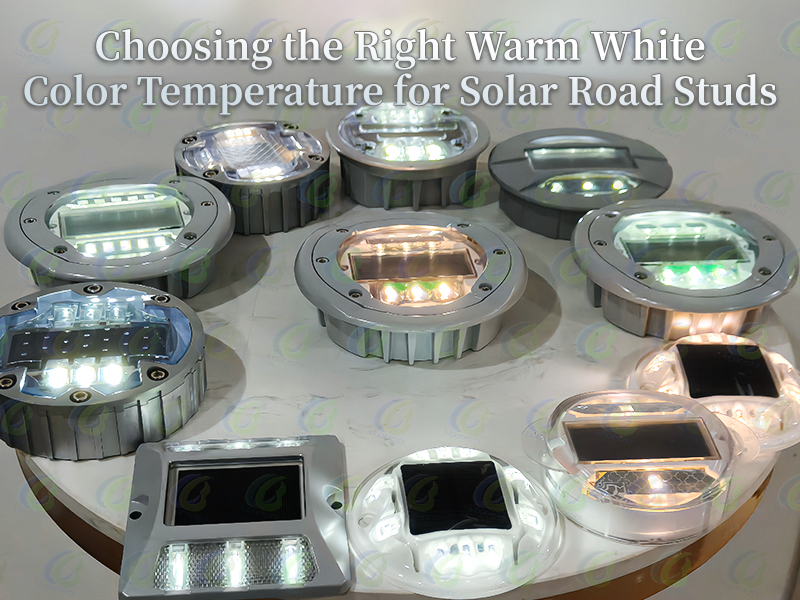
Discover the difference between 6000K, 4000K, 3000K, and 2500K solar road stud color temperatures. Learn how to choose the best warm white solar road studs for highways, cycle lanes, pedestrian pathways, parks, and landscape lighting projects.
Choosing the Right Warm White Color Temperature for Solar Road Studs
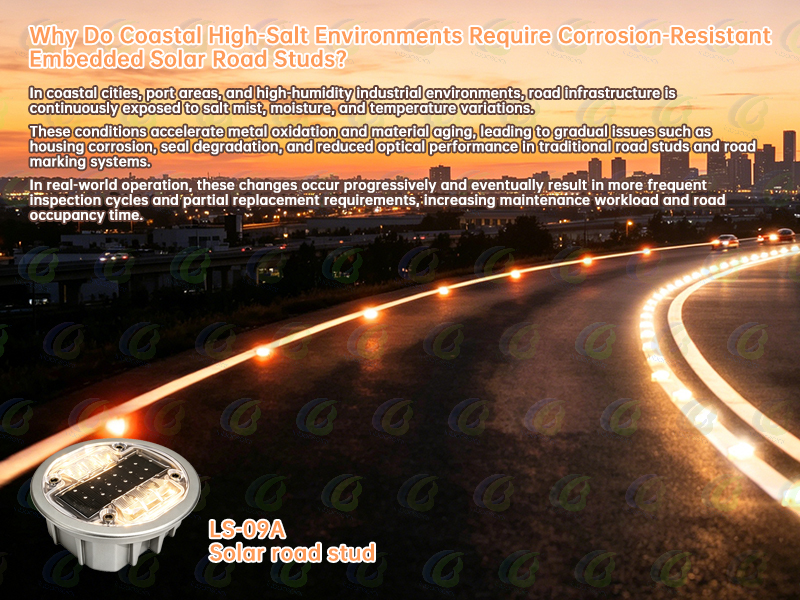
Coastal high-salt environments accelerate road infrastructure corrosion. Embedded solar road studs with corrosion-resistant materials and IP68 protection help improve night visibility and extend maintenance cycles.
Why Do Coastal High-Salt Environments Require Corrosion-Resistant Embedded Solar Road Studs?