
How Solar Road Studs Improve Bicycle Lane Visibility at Night
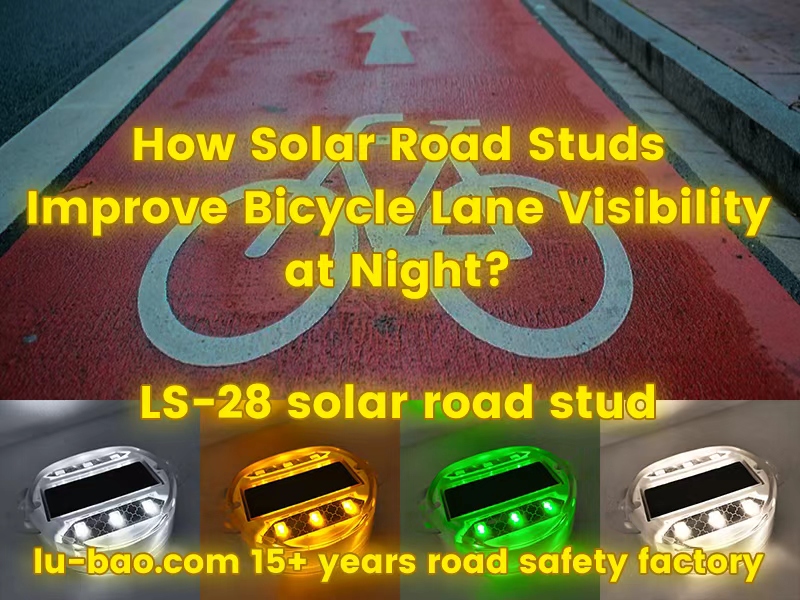
How Solar Road Studs Improve Bicycle Lane Visibility at Night
Night cycling safety depends on seeing and being seen. Active, LED-based solar road studs emit their own light to create continuous guidance for riders and a clear warning for motorists—working in rain, fog, and low-light conditions.
Why bicycle lanes need solar road studs
Continuous luminous guidance
Constant (steady) lighting in white or yellow forms a readable light rail along the lane edge or centerline. Riders hold a smoother line, gauge curvature earlier, and react sooner to obstacles.
High conspicuity, multi-angle
LEDs project light visible at low rider eye heights and shallow approach angles—something passive reflectors cannot reliably achieve.
All-weather reliability
With IP68 sealing, studs stay operational in rain, standing water, road salt, and dust. Active light cuts through headlight glare on wet pavement where paint often “disappears.”
Traffic conflict warning
A contrasting color strategy (e.g., steady white for rider guidance and flashing yellow at conflict points) draws motorist attention at driveways, intersections, and bus stops.
Anchored and load-resistant
Properly embedded/anchored studs are non-movable and withstand heavy loads (snowplows, service vehicles), preventing misalignment that can create hazards.
Energy autonomy
Integrated photovoltaic panel + battery keeps lanes lit overnight without cabling—ideal for retrofits and corridors where grid access is limited.
Key functions that matter for bike lanes
- Steady (constant) lighting: Best for long segments and curves; reduces steering corrections and rider fatigue.
- Flashing modes (selective use): Use sparingly at conflict areas (merges, crossings) to improve driver detection without distracting riders.
- Color coding:
- White: rider guidance (center/edge)
- Yellow/Amber: caution zones, crossing approaches
- Red: wrong-way or end-of-path warnings
- Blue/Green: specialty cues (emergency access, wayfinding)
- Low profile & smooth edges: Embedded, chamfered, slip-resistant lenses maintain ride comfort and minimize snag risk for bicycle tires.
Professional Choice — lubaosolar LS-28 (Plastic Embedded Solar Road Stud)
The LS-28 is engineered for bicycle lanes and urban corridors that require durable, low-maintenance, and visible guidance.
| Parameter | Specification |
|---|---|
| Brand / Model | lubaosolar — LS-28 |
| Type / Material | Embedded / Polycarbonate (PC) |
| Size | 140 mm (Dia.110 mm) × H 36 mm |
| LED Qty | Double-sided: 2 / 4 / 6 pcs · Single-sided: 1 / 3 / 5 pcs |
| Colors | Red, Yellow, Blue, Green, White (warm or cool) — customizable both sides |
| Lighting Modes | Flashing, Steady (constant) |
| Battery | 3.2V / 3.7V · 500 mAh – 1500 mAh |
| Waterproof | IP68 |
| Acceptable Weight | 30 tons |
| Operating Temperature | -40 °C to +85 °C |
| Design Advantage | Embedded flush-fit — no obvious protrusions; prevents snow-shovel damage |
Why LS-28 works for bike lanes: steady white or yellow LEDs form a continuous guide for riders; high LED count (4–6) improves lateral visibility to motorists; IP68 and 30-ton rating ensure durability under heavy maintenance vehicles and weather; embedded profile preserves ride comfort.
Deployment guidance (practical)
- Placement: Mount on lane edge or between motor lane and cycle track to form a luminous barrier; avoid primary tire line.
- Spacing: 5–10 m in straight segments; 3–5 m on curves and near crossings.
- Mode plan: steady white along segments; flashing yellow at conflict points.
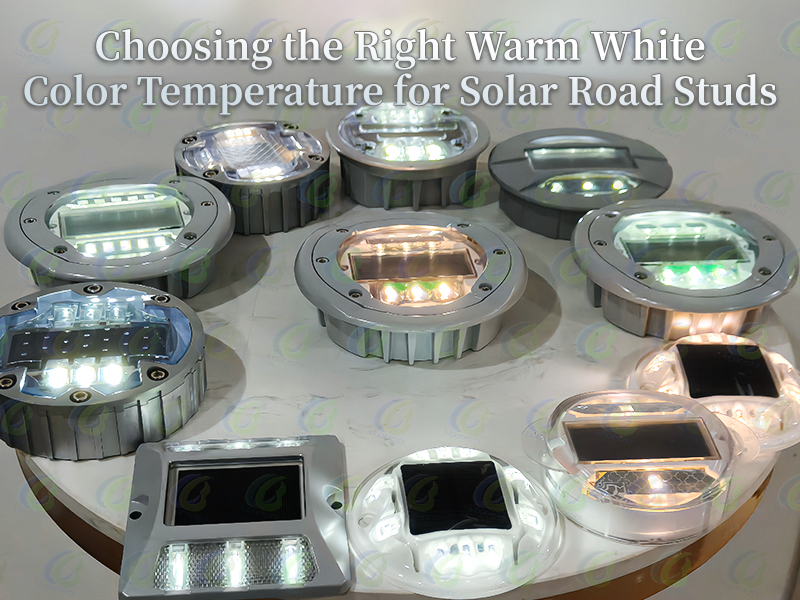
- Color temperature: warm white (3000–4000K) for urban glare control; cool white (5000–6000K) for rural reach.
- Surface integration: ensure clean, sound substrate; use approved anchors/adhesives for non-movable installation.
- Maintenance: periodic lens cleaning and battery checks; telemetry optional for remote health monitoring.
Safety & design tips
- Maintain luminance contrast with surroundings; dim or switch modes in over-lit zones to preserve visibility hierarchy.
- Aim optics to minimize upward spill and nearby glare affecting residents.
- Standardize color and spacing across corridors to build rider expectation and reduce surprises.
- Consider optional IoT telemetry for runtime, battery health, and scheduled mode profiles during peak cycling hours.
Conclusion
Active, embedded solar road studs like the lubaosolar LS-28 give bicycle lanes continuous, legible guidance and create unmistakable visual cues for motorists. With IP68 protection, 30-ton load capacity, and flexible lighting modes, LS-28 is a practical, low-maintenance solution to improve night-time cycling safety in any weather.
Solar Road Stud Certification Standards You Should Know (ASTM, EN1463, FCC, CE)
The Future of Smart Roads: Solar Road Studs with IoT Integration
Related Article