

Solar Pavement Markers and Solar Panel Efficiency
author: Eng.Jose
2025-01-02
Solar Pavement Markers and Solar Panel Efficiency
Solar pavement markers rely on sunlight for recharging, using solar panels to convert solar energy into power stored in rechargeable batteries. The charging efficiency depends heavily on the type of solar panel used. Let’s explore the three commonly used types of solar panels in solar-powered road markers:
Polycrystalline Silicon Solar Panels
-
Efficiency: Typically ranges from 14% to 16%.
-
Charging Rate: These panels are moderately efficient but require longer sunlight exposure to fully charge the pavement markers compared to other types.
Monocrystalline Silicon Solar Panels
-
Efficiency: Generally falls between 15% and 20%.
-
Charging Rate: With higher efficiency, monocrystalline panels charge faster and are more suitable for consistent power needs in solar pavement markers.
SunPower US Solar Panels
-
Charging Rate: These panels offer the quickest charging rates, making them ideal for applications where maximum efficiency is essential.
How Long Does It Take for Solar Pavement Markers to Fully Charge?
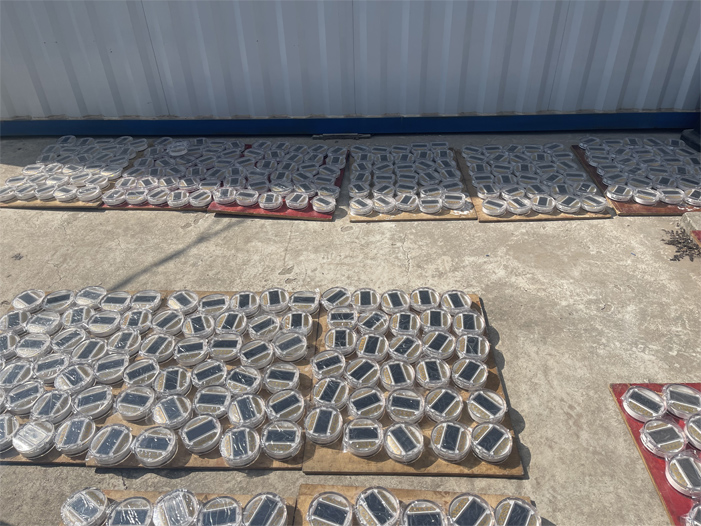
Solar pavement markers are typically designed to charge effectively within 1 hour under peak sunlight conditions (around noon). This one-hour charge can support approximately 10 hours of nighttime illumination. For a full charge, these markers may require several sunny days to accumulate maximum battery capacity.
Factors Influencing Charging Performance
-
Solar Panel Type and Efficiency: Higher efficiency panels lead to faster charging.
-
Circuit Design: Quick-charging power chips ensure efficient energy transfer.
-
Battery Capacity: Active and high-capacity batteries can store more energy.
By selecting the appropriate solar panel type and optimizing design components, solar pavement markers can ensure consistent and reliable performance, even in varied environmental conditions.
What Are the International Standards for Solar Road Stud Lighting Colors?
Ensuring Full Waterproofing for Solar Raised Aluminum Pavement Markers
Related Article
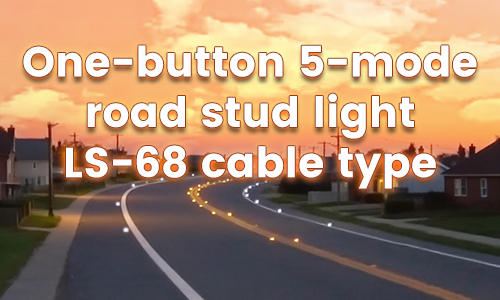
Wired LED Road Studs provide stable illumination and reliable road guidance for highways, tunnels, and traffic engineering projects with durable design and reduced maintenance needs.
Why Wired LED Road Studs Are Ideal for Highway and Tunnel Applications?
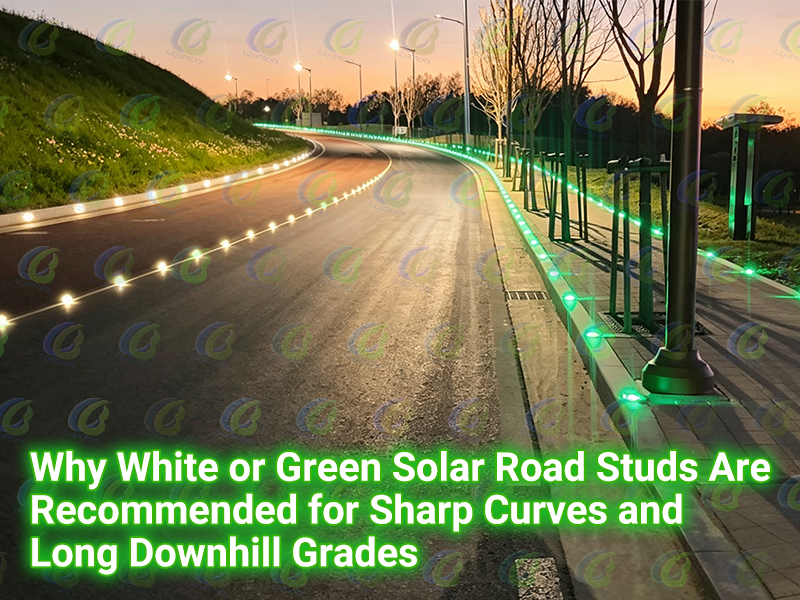
Road safety manufacturer explains solar road stud color selection for sharp curves and long downhill sections. Compare white, green, amber, and red light performance under low illumination and foggy conditions. Custom solutions available.
Roadway Delineation: Why White or Green Solar Road Studs Are Recommended for Sharp Curves and Long Downhill Grades
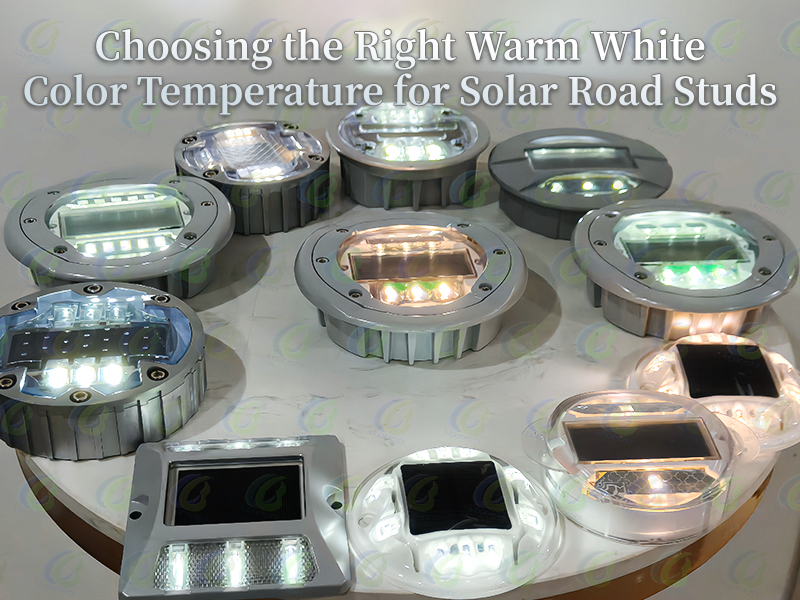
Discover the difference between 6000K, 4000K, 3000K, and 2500K solar road stud color temperatures. Learn how to choose the best warm white solar road studs for highways, cycle lanes, pedestrian pathways, parks, and landscape lighting projects.
Choosing the Right Warm White Color Temperature for Solar Road Studs
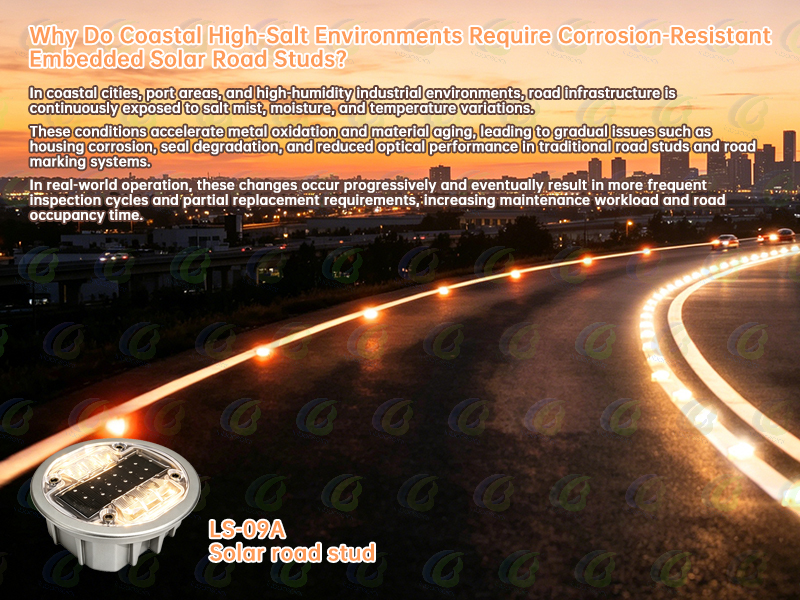
Coastal high-salt environments accelerate road infrastructure corrosion. Embedded solar road studs with corrosion-resistant materials and IP68 protection help improve night visibility and extend maintenance cycles.
Why Do Coastal High-Salt Environments Require Corrosion-Resistant Embedded Solar Road Studs?