
Project Proposal: LS-68A Solar Road Studs for Highways
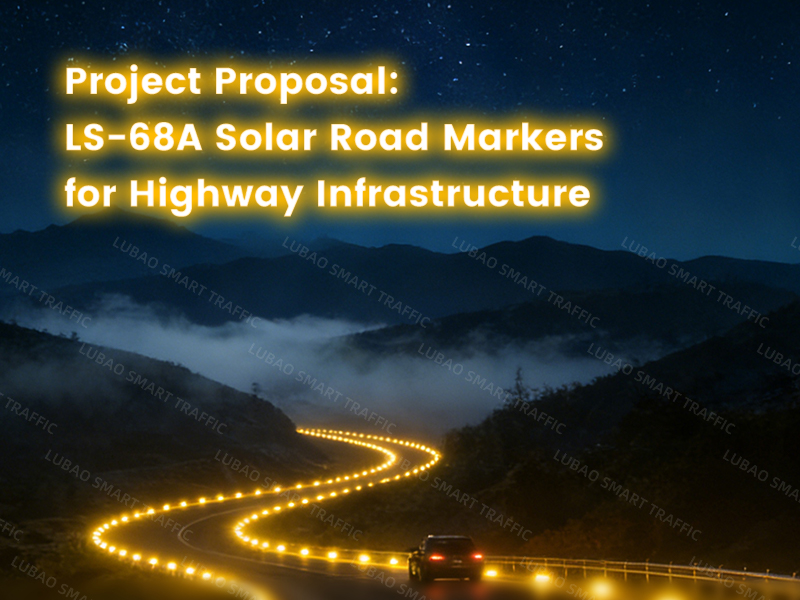
Project Proposal: LS-68A Solar Road Studs for Highways
lu-bao (brand: lubaosolar) — Proposal to deploy LS-68A solar road stud lights across major African corridors for improved nighttime visibility, safety, and climate resilience.
1. Executive Summary
The LS-68A is Class F internal-illumination IIRPM, designed to meet strict highway standards including ASTM D4280, EN1463-Part 3, and carries CE conformity claims for applicable markets.
2. Project Context & Market Opportunity
2.1 Growing Road Infrastructure in Africa
Africa’s road network is undergoing expansion and modernization with multiple trunk corridor projects and national highway upgrades:
- Trans-African Highway Network — continental trade corridors linking regions. (africasolutionsmediahub.org)
- Lagos–Abidjan Highway Development Project — US$15 billion initiative linking West African trade routes. (GlobalHighways)
- Kenya highway upgrades — major contracts and rehabilitation targeting resilience and capacity. (d10dev.globalhighways.com)
- East & Northern Corridor links — multinational works improving connectivity across Tanzania, Kenya, Uganda and neighbours. (GlobalHighways)
These infrastructure programs present immediate demand for durable, low-maintenance road delineation solutions — especially where grid lighting is unavailable or costly to install.
3. Product Overview: LS-68A Solar Road Stud Light
3.1 Key Features & Competitive Advantages
LS-68A
Dia. 165mm × H 48.9mm
Double-sided 6 / Single-sided 3
>>20,000 lbs
All-Weather, High-Durability Design
- IP68 waterproof rating for flooding and coastal salt exposure.
- Corrosion-resistant aluminum & polycarbonate body for harsh environments.
- Embedded low-profile installation (~11 mm) reduces maintenance damage risk.
- High load tolerance (>20,000 lbs) — heavy vehicle and truck corridors.
Advanced Safety & Visibility
- Refraction-optimized optics focusing brightest vertical illumination at driver viewing angles.
- AI sensor with 5-second delay for continuous warning during headlight transitions.
- Working modes: flashing, synchronous flashing, steady lighting.
Energy & Performance
- Solar panel 0.5 W, 5.5 V; energy storage supports >32 hours of lighting.
- Operating temperature range: −40 °C to 70 °C.
Standards & Compliance: LS-68A meets ASTM D4280, is designed to satisfy EN1463-Part 3 highway marker requirements where applicable, is offered with CE conformity documentation for EU export compliance, and is a Class F internal illumination IIRPM product.
4. Alignment with African Road Safety & Infrastructure Goals
4.1 Enhancing Safety on Key Corridors
Night-time visibility and lane delineation are persistent safety gaps on many African highways. Deploying LS-68A solar road studs will:
- Improve lane guidance on high-speed stretches and inter-urban corridors.
- Reduce collision risk in unlit or intermittently lit areas.
- Provide durable delineation for heavy freight routes such as Lagos–Abidjan and East African corridors.
4.2 Supporting Climate Resilience & Sustainability
Solar road studs eliminate reliance on grid infrastructure, lower lifecycle energy costs, and are resilient to climate extremes — aligning with climate adaptation programs (see: Global Center on Adaptation).
5. Proposed Implementation Plan
5.1 Phase 1 — Pilot Deployment
Target corridors: select high-traffic urban bypasses and rural highway segments with limited lighting — e.g., Nairobi–Mombasa Expressway sections and priority West African trade links.
- Site surveys and solar resource assessment.
- Install 1–2 km pilot sections with LS-68A at proposed spacing (spacing subject to design standard and local regulation).
- Monitor performance, reliability, and maintenance needs for 6 months.
5.2 Phase 2 — Scale-Up & Capacity Building
- Expand deployment across prioritized trans-national and national corridors.
- Train local technicians in installation, inspection and maintenance.
- Set up regional warehouses and spare-part logistics.
6. Impact & Benefits
Safety
- Reduced night-time accidents and clearer lane delineation in poor-visibility conditions.
Economic
- Lower installation and operational cost vs. electrified linear lighting; reduced cabling and trenching costs.
- Improved reliability for trade routes, supporting commerce.
Environmental
- Zero grid electricity consumption for installed studs.
- Long service life reduces replacement frequency and waste.
- Bird TenX: 10 major road networks connecting Africa — africasolutionsmediahub.org
- US$15 billion for West Africa road route — GlobalHighways
- Kenya construction contract cancelled — d10dev.globalhighways.com
- Tanzania’s work on East Africa’s multi-national road project — GlobalHighways
- Kenya developing Climate Resilience Nairobi-Mombasa Expressway Project — Global Center on Adaptation
RoHS-Compliant Solar Road Studs: A Key Foundation for CE & FCC Certification Under EN 1463-3 Class F
Riding Lane Safety Upgrade: Solar Road Stud Installation Case Study (With Real Project Photos)
Related Article