

Why Static-Lighting Solar Road Studs Are the Best Choice for Highways
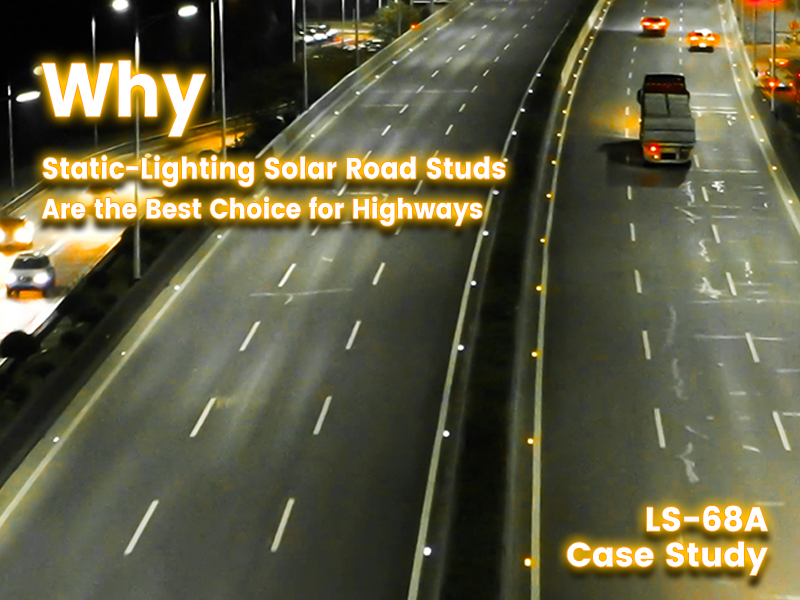
Why Static-Lighting Solar Road Studs Are the Best Choice for Highways
LS-68A Case Study — What DOT & EU Construction Company Really Care About
Highway authorities across the US and Europe are becoming more selective when specifying solar road studs. Beyond brightness, long-term reliability, driver behavior, standards compliance, and lifecycle cost are now the dominant decision factors.
For high-speed, heavy-traffic highways, static-lighting solar road studs— such as the LS-68A heavy duty solar road stud—are increasingly preferred over flashing modes.
Below are the key focus points for DOT and EU buyers, and how LS-68A addresses them.
1. Driver Safety & Human Factors (Top Priority for DOT & EU)
Buyer concerns
- Avoid driver distraction, visual fatigue, or misinterpretation
- Maintain consistent lane guidance at speeds above 80–120 km/h
- Ensure compliance with human-factors safety guidelines
Why static lighting wins
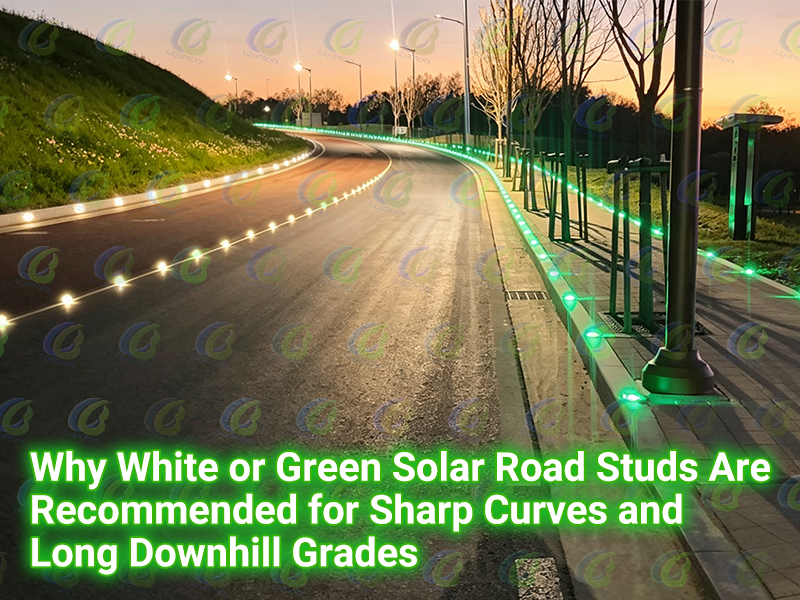
Static lighting creates a continuous, stable light line, which enhances lane edge recognition, supports predictive driving behavior, and reduces confusion compared to asynchronous flashing lights.
LS-68A advantage
- Uniform LED output with no sudden brightness changes
- Optimized for expressways, motorways, long-radius curves, and lane separation
DOT & EU takeaway: Static lighting improves driver comfort and reaction time on high-speed roads.
2. Standards & Compliance (Non-Negotiable for Approval)
Buyer concerns
- Recognized road marking standards
- Testing equivalency between US and EU specifications
- Clear documentation for audits and tenders
LS-68A compliance logic
EN1463-3 ≈ ASTM 4280 (Class F)
Same performance tests with different naming conventions.
- Luminous intensity
- Compression resistance
- Waterproofing
- Temperature cycling
Static lighting benefit
Static lighting makes light output easier to verify, avoids flashing frequency disputes, and delivers stable photometric results over time.
DOT & EU takeaway: Static mode simplifies approval, testing, and long-term compliance reporting.
3. Heavy-Duty Load & Structural Durability
Buyer concerns
- Heavy truck traffic
- Snowplow impact
- Repeated tire loading
- Embedded installation longevity
LS-68A engineering highlights
- Heavy-duty aluminum alloy body
- Embedded, low-profile design
- Withstands >50,000 lbs (≈20+ tons) static load
- IP68 waterproof sealing
Why static lighting matters
Static lighting avoids high-frequency on/off stress on LEDs, reduces internal thermal cycling, and extends overall component lifespan.
DOT & EU takeaway: Static lighting plus heavy-duty construction equals lower replacement rates.
4. Maintenance & Lifecycle Cost (Budget-Driven Decisions)
Buyer concerns
- Minimized lane closures
- Reduced maintenance labor
- Lower replacement frequency
- Predictable OPEX over 3–5 years
LS-68A result
Longer battery and LED lifespan, fewer maintenance interventions, and a lower total cost of ownership (TCO).
DOT & EU takeaway: Static lighting reduces long-term highway maintenance costs.
5. Energy Management & Reliability (All-Weather Performance)
Buyer concerns
- Long winters
- Fog, rain, and dust
- Low-sunlight regions
Why static mode is preferred
- Predictable energy consumption
- No peak current spikes
- Better autonomy in poor solar conditions
LS-68A optimization
- High-efficiency solar panel
- Smart charge–discharge control
- Stable night-long illumination
DOT & EU takeaway: Static lighting ensures visibility even in low-solar environments.
6. Traffic Control Logic & Application Fit
Where DOT & EU prefer static lighting
- Highway lane edges
- Median separation
- Continuous guidance zones
- Long straight road sections
Where flashing is still used
- Temporary work zones
- Hazards or sharp curve warnings
- Emergency delineation
Procurement insight: Many DOT tenders now specify static lighting for permanent highway installations, reserving flashing modes only for warning applications.
Final Buyer Conclusion
For highways and heavy-duty roads, static-lighting solar road studs are not a downgrade— they are a professional, engineering-driven choice.
- Stable, distraction-free guidance
- EN1463-3 / ASTM 4280 alignment
- Heavy-load, embedded durability
- Lower maintenance and lifecycle cost
- Reliable energy performance
The LS-68A static lighting mode delivers what road authorities value most: safety, compliance, and long-term reliability.
Solar Road Studs LS-01A in Airport Road Application
How Solar Road Studs Work: A Complete Guide
Related Article